Tuesday, March 24, 2009
Tipitaka in Norway 2009
ScandAsia. Norway News
Thai Airways Donates Air-miles to Norwegian Buddhists
By Sarah Mia Haagerup
The World Tipiṭaka Edition, 40-volume Romanised edition of the 25-century old teaching of the Buddhist Theravāda tradition in the orthodox and original Pāḷi language.
Thai Airways has recently offered 3.9 million air-miles to HRH, the late Princess Galyani Vadhana's Tipiṭaka Endowment Project. The donated miles will be used to transport a 40-volume set of sacred Buddhist scriptures (The World Tipiṭaka Edition) to The Buddhist Federation of Norway. The scriptures are in Roman script, and were given, as a royal gift of wisdom and peace from Thailand, to The Buddhist Federation of Norway last year in connection with the funeral of Princess Galyani Vadhana.
The scriptures, which have been produced especially for The Buddhist Federation of Norway, will physically be handed over at a ceremony on the 17th of August in the Royal Thai Embassy in Oslo by representatives from the Dhamma Society -- a charitable organisation in the Buddhist Theravāda Tradition, founded in 1997.
According to the president of The Buddhist Federation of Norway, Egil Lothe, the scriptures have a practical and symbolic significance to those who practice Buddhism in Norway. He adds: “The gift is a great encouragement and acknowledgement of our efforts in this organisation.”
Since 1999 the Dhamma Society Fund has undertaken the publication of the Tipiṭaka in Roman Script, the World Edition. In 2005, the printing project was finally completed and was published in 40 volumes as a homage to the Buddha and in honour of the Buddhist Sovereign Monarchy of Thailand. For an inaugural presentation, HRH Princess Galyani Vadhana, as Honorary President and Royal Patron, led a historic 24-hour Pilgrimage by a special flight from Bangkok to Colombo to present the special inaugural edition as a royal gift of Dhamma to the President of Sri Lanka on March 6, 2005.
Also Sweden received a special World Tipiṭaka Edition in 2005.
สแกนเอเซีย. -- นอรเวย์นิวส์
การบินไทยมอบไมล์สะสมสำหรับชาวพุทธนอรเวย์
เขียนโดย ซาร่า มิอา หาเกรับ
พระไตรปิฎกสากล ชุด 40 เล่ม อักษรโรมัน (World Tipiṭaka in Roman Script Edition) จัดพิมพ์์ขึ้นจากคําสอนเก่าแก่ 25 ศตวรรษ ในพระพุทธศาสนาฝ่ายเถรวาทที่สืบทอดมาโดยเที่ยงตรงเป็นภาษาปาฬิ
เมื่อเร็วๆ นี้ บริษัทการบินไทย จํากัด (มหาชน) ได้มอบไมล์สะสม 3.9 ไมล์ แก่โครงการเผยแผ่ พระไตรปิฎกสากล ในสมเด็จกรมหลวงนราธิวาสราชนครินทร์ (มูลนิธิร่วมจิตต์ฯ น้อมเกล้า เพื่อเยาวชน ในพระบรมราชินูปถัมภ์). ไมล์สะสมที่รับบริจาคนี้จะนําไปใช้ในการอัญเชิญคัมภีร์ ในพระพุทธศาสนา ชุด 40 เล่ม (พระไตรปิฎกสากล) เป็นพระธัมมทานแห่งปัญญาและสันติสุข จากสมเด็จพระเจ้าพี่นางเธอ เจ้าฟ้ากัลยาณิวัฒนา กรมหลวงนราธิวาสราชนครินทร์ มอบแก่สหพันธ์พระพุทธศาสนาแห่งนอรเวย์ ซึ่งเป็นส่วนหนึ่งของการงานบําเพ็ญกุศลงานพระเมรุ ในสมเด็จกรมหลวงนราธิวาสราชนครินทร์ เมื่อปีที่แล้ว
พระไตรปิฎกสากลชุดนี้ได้จัดพิมพ์ขึ้นเป็นพิเศษแก่สหพันธ์พุทธศาสนาแห่งนอรเวย์ และจะมีพิธี จัดมอบอย่างเป็นทางการในที่สถานทูตไทย ณ กรุงออสโล โดยผู้แทนกองทุนสนทนาธัมม์นําสุขฯ ในพระสังฆราชูปถัมภ์ฯ ซึ่งเป็นองค์กรกุศลในพระพุทธศาสนาเถรวาท ก่อตั้งขึ้นในปี พ.ศ. 2542
มร. อีจิล โลเท่ (President Egil Lothe), ประธานสหพันธ์พุทธศาสนาแห่งนอรเวย์ (The Buddhist Federation of Norway) ได้กล่าวว่าพระไตรปิฎกชุดนี้มีความหมาย ในทั้งในเชิงปฏิบัติที่เป็นจริงและในด้านสัญลักษณ์แก่ผู้ที่ปฎิบัติตามหลักพระพุทธศาสนาในประเทศนอรเวย์ “พระธัมมทานนี้เป็นกําลังใจและเครื่องหมายแห่งความอุตสาหะพยายามขององค์กรเรา”
นับแต่ปี พ.ศ. 2542 เป็นต้นมา กองทุนสนทนาธัมม์นําสุขฯ ในพระสังฆราชูปถัมภ์ฯ ได้ดําเนินโครงการ พระไตรปิฎกภาษาปาฬิ โดยจัดพิมพ์เป็นอักษรโรมัน เรียกว่า พระไตรปิฎกฉบับสากล (The World Tipiṭaka Edition) การดําเนินงานได้สําเร็จในปี พ.ศ. 2548 โดยจัดพิมพ์ ชุดละ 40 เล่ม เพื่อถวายเป็นพุทธบูชา และเฉลิมพระเกียรติพระมหากษัตริย์พุทธมามกะไทย โดยมีสมเด็จพระเจ้าพี่นางเธอ เจ้าฟ้ากัลยาณิวัฒนา กรมหลวงนราธิวาสราชนครินทร์ ในฐานะผู้ทรงเป็นประธานกิตติศักดิ์ และองค์อุปถัมภ์ เสด็จจาริกภายในเวลา 24 ชม โดยสายการบินเที่ยวพิเศษจากกรุงเทพสู่กรุงโคลัมโบ อัญเชิญพระไตรปิฎกเป็นพระธัมมทานไปพระราชทานแก่ประธานาธิบดีแห่งศรีลังกา เมื่อวันที่ 6 มีนาคม พ.ศ. 2548.
ในปี พ.ศ. 2548 ประเทศสวีเดนก็ได้รับพระราชทานพระไตรปิฎกสากลด้วย
จดหมายเหตุพระไตรปิฎกสากล อักษรโรมัน ดำเนินงานโดยกองทุนสนทนาธัมม์นำสุข ท่านผู้หญิง ม.ล.มณีรัตน์ บุนนาค ในพระสังฆราชูปถัมภ์ สมเด็จพระญาณสังวร สมเด็จพระสังฆราช สกลมหาสังฆปริณายกพ.ศ. 2542-2552.
สนับสนุนโดยโครงการสมทบกองทุนเผยแผ่พระไตรปิฎกสากลในสมเด็จกรมหลวงนราธิวาสราชนครินทร์ ดำเนินงานโดยงานโดยมูลนิธิร่วมจิตต์น้อมเกล้าฯ ในพระบรมราชินูปถัมภ์ พ.ศ. 2550-ปัจจุบัน
Digital Archives from the M.L. Maniratana Bunnag Dhamma Society's World Tipiṭaka Project in Roman Script, 1999-2009.
World Tipiṭaka Project :
Tipitakaquotation
www.tipitakahall.net
www.dhammasociety.org
Archives 1999-present :
World Tipitaka Council B.E.2500 (1956)
World Tipiṭaka in Roman Script
Tipitaka Studies Reference 2007
Royal Patron of Tipitaka


Saturday, March 7, 2009
2009 World Tipiṭaka Presentation in USA
2009 World Tipiṭaka Presentation in USA

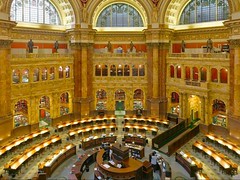
The Library of Congress, Washington DC, USA
One of the institutional recipients of the King of Siam's historic Tipiṭaka edition in 1895
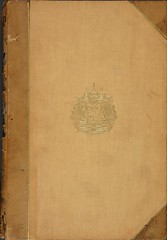 | 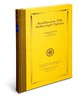 |
King of Siam Tipiṭaka (1893) 39 Volume | World Tipiṭaka in Roman Script (2009) 40 Volume |
 |  |
The World Tipiṭaka 2009 in USA:
From Sacred Pāḷi Text to Wisdom Heritage of Humanity
Theravāda or Doctrine of Elders is a school of Buddhasāsana, a Pāḷi-language term typically often translated as Buddhism. Theravāda Buddhasāsana draws profound scriptural direction from the Pāḷi Canon or Tipiṭaka, acknowledged to be the oldest authenthic record of Buddha's words. Theravāda Buddhasāsana is the predominant religion of South and Southeast Asia, prevailing from the 1st century BC. The sangha or Buddhist order of monks is one of the Three Jewels of Buddhasāsana (the other two being the Buddha and the Dhamma or the Doctrine).
In 2002, the M.L. Maniratana Bunnag Dhamma Society Fund under the Patronage of His Holiness Somdet Phra Ñāṇasaṃvara the Supreme Patriarch of Thailand published for the first time in Roman-script edition the complete Pāḷi Tipiṭaka in 40 volumes, based on the resolution of the Great International Tipiṭaka Council which was convened five decades earlier in Yongoon, Myanmar, by 2500 erudite Buddhist monks worldwide.
In 2005, Her Royal Highness Princess Galyani Vadhana, the Royal Matriarch of Thailand and Her Excellency Chandrika Bandaranaike Kumaratunga, President of Domocratic Socialist Republic of Sri Lanka jointly inaugurated the World Tipiṭaka Edition in Colombo, Sri Lanka. Since then, this Roman-script canon -- the World Tipiṭaka Edition in Roman Script -- has been presented as a Royal Gift of Wisdom & Peace from Thailand to various libraries and leading institutions around the world. By 2008 over 18 countries, including Sri Lanka, Sweden, Thailand, Netherlands, India and Japan, have received the World Tipiṭaka as royal gift.
While we, the Patrons of the World Tipiṭaka, are making available the Pāḷi text of the Buddhist canonical scriptures which are the objects of religious veneration and belief, it is not our purpose to advocate the position of a sectarian doctrine or religious system in any institution. Rather, we hope to provide a means of access to the Buddhist scriptures as a wisdom heritage of humanity, based on the most accurate historical research and latest technology available. It is our intention to provide a new ground of knowledge towards wisdom in the Tipiṭaka for sustainable peace and inner security for the international community worldwide.
The Tipiṭaka WebService (www.tipitakaquotation.net), also developed by the Dhamma Society, has been available online since 2008. The World Tipiṭaka Database is currently being developed as a Wisdom Heritage Repository Online and will soon be connected to the digital cultural heritage of European Union and North America.



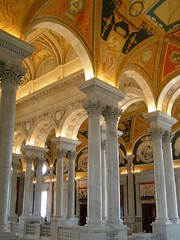
The Library of Congress, Washington DC
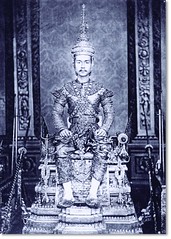
In 2009, Patrons of the World Tipiṭaka will organise the first Tipiṭaka Presentation in the United States of America. This commemorative presentation will follow the historic trails of Siam-script Tipiṭaka which was presented in 1895 by King of Chulachomklao of Siam (Thailand) to no less than 50 institutions in USA , including, the Library of Congress in Washington, D.C., and leading universities across USA.

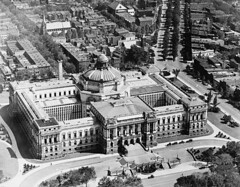
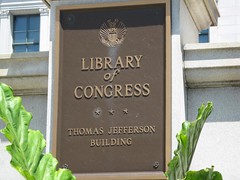
King of Siam Edition has been preserved in Asian Reading Room
 | The World Tipiṭaka Presentation 2009 is supported by THAI Airways International's “Miles for Merit” |  |
Thursday, February 12, 2009
Miles for Merit 2009
News Release
February 4th, 2009
February 4th, 2009
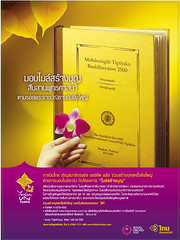
THAI Launches ‘Miles for Merit 2009’
Preserving Wisdom Heritage of Humanity
Preserving Wisdom Heritage of Humanity
 | |  |
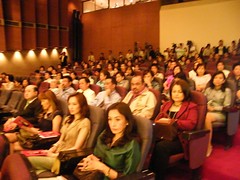
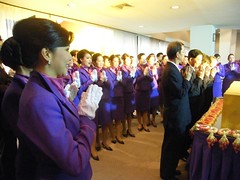
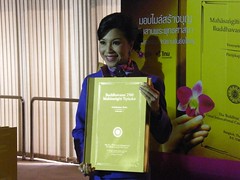
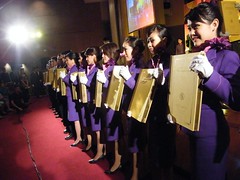
Thai Airways International Public Company Limited introduces ‘Miles for Merit 2009’, a merit-making campaign for Royal Orchid Plus members. Through this campaign, Royal Orchid Plus members can donate miles to support ‘the World Tipiṭaka Presentation,’ a project graciously initiated by HRH the late Princess Galyani Vadhana, the World Tipiṭaka Patron.
Mr. Pandit Chanapai, THAI’s Executive Vice President for Commercial Department said that THAI first embarked upon the ‘Miles for Merit campaign’ in 2007. The campaign was a resounding success. Award tickets redeemed from donated miles brought 80 venerable monks to Buddhist holy sites in India and Nepal, in honour of His Majesty the King’s auspicious 80th anniversary.
This year ‘Miles for Merit 2009’ campaign will support the transportation as well as the presentation of the 40-volume set of ‘World Tipiṭaka Edition in Roman Script’ (the world's first complete Great International Council Edition) to leading international institutions worldwide. For the very first time, the ‘World Tipiṭaka Edition’ will be presented as a royal gift of wisdom and peace from Thailand to the world, fulfilling the late Princess Galyani Vadhana’s wish on this project. Tipiṭaka, written in Pāḷi language, contains the 25-century old sacred text of the Buddhist Theravāda heritage.
Khunying Saengduen na Nakorn, President of Princess Galyani Vadhana's Tipiṭaka Endowment Project supported by the Ruamchit Norm Klao Foundation, said that since the project inauguration in 2005, many countries have requested the World Tipiṭaka from Thailand. The World Tipiṭaka has been presented to leading institutions in Sweden, India, Netherlands, and Japan with priority given to institutions which received the Siam-script Tipiṭaka from King Chulalongkorn Chulachomklao of Siam, Princess Galyani Vadhana's grandfather, over a century ago. Now published in the internationally recognised Roman script, people all over the world will have much greater access to recite and study the Tipiṭaka.
Thai Airways International Public Company is proud to be part of the ‘World Tipiṭaka Presentation’ project. The 2009 Tipiṭaka Presentation will include educational and research institutions in the United States such as the Library of Congress, the Smithsonian Institute in Washington DC and top universities across the country. The Project targets institutions in no less than 32 countries which received the Siam-script edition over a century ago.
Royal Orchid Plus members are invited to support the ‘Miles for Merit 2009’ campaign. Donations of 1,000 miles or more can be made online at www.thaiairways.com/rop or by calling 0-2278-4022, until April 30, 2009.
Mr. Pandit Chanapai, THAI’s Executive Vice President for Commercial Department said that THAI first embarked upon the ‘Miles for Merit campaign’ in 2007. The campaign was a resounding success. Award tickets redeemed from donated miles brought 80 venerable monks to Buddhist holy sites in India and Nepal, in honour of His Majesty the King’s auspicious 80th anniversary.
This year ‘Miles for Merit 2009’ campaign will support the transportation as well as the presentation of the 40-volume set of ‘World Tipiṭaka Edition in Roman Script’ (the world's first complete Great International Council Edition) to leading international institutions worldwide. For the very first time, the ‘World Tipiṭaka Edition’ will be presented as a royal gift of wisdom and peace from Thailand to the world, fulfilling the late Princess Galyani Vadhana’s wish on this project. Tipiṭaka, written in Pāḷi language, contains the 25-century old sacred text of the Buddhist Theravāda heritage.
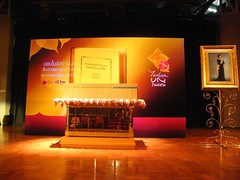
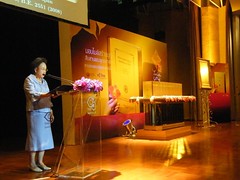
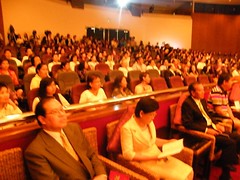
Khunying Saengduen na Nakorn, President of Princess Galyani Vadhana's Tipiṭaka Endowment Project supported by the Ruamchit Norm Klao Foundation, said that since the project inauguration in 2005, many countries have requested the World Tipiṭaka from Thailand. The World Tipiṭaka has been presented to leading institutions in Sweden, India, Netherlands, and Japan with priority given to institutions which received the Siam-script Tipiṭaka from King Chulalongkorn Chulachomklao of Siam, Princess Galyani Vadhana's grandfather, over a century ago. Now published in the internationally recognised Roman script, people all over the world will have much greater access to recite and study the Tipiṭaka.
Thai Airways International Public Company is proud to be part of the ‘World Tipiṭaka Presentation’ project. The 2009 Tipiṭaka Presentation will include educational and research institutions in the United States such as the Library of Congress, the Smithsonian Institute in Washington DC and top universities across the country. The Project targets institutions in no less than 32 countries which received the Siam-script edition over a century ago.
Royal Orchid Plus members are invited to support the ‘Miles for Merit 2009’ campaign. Donations of 1,000 miles or more can be made online at www.thaiairways.com/rop or by calling 0-2278-4022, until April 30, 2009.
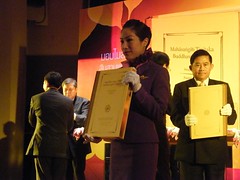
คำกล่าวในการเปิดโครงการ “ไมล์สร้างบุญ”
โดย คุณหญิงแสงเดือน ณ นคร
ประธาน “โครงการสมทบกองทุนเผยแผ่พระไตรปิฎกสากลในสมเด็จกรมหลวงนราธิวาสราชนครินทร์”
ในมูลนิธิร่วมจิตต์น้อมเกล้าฯ เพื่อเยาวชน ในพระบรมราชินูปถัมภ์
และ
ผู้แทนผู้อุปถัมภ์พระไตรปิฎกสากล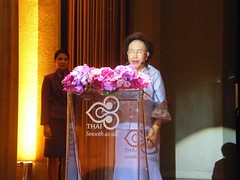
ในนามของโครงการสมทบกองทุนเผยแผ่พระไตรปิฎกสากล ในสมเด็จกรมหลวงนราธิวาสราชนครินทร์ ซึ่งดำเนินงานโดยมูลนิธิร่วมจิตต์น้อมเกล้าฯ เพื่อเยาวชน ในพระบรมราชินูปถัมภ์ ดิฉันรู้สึกปลื้มปีติที่ บริษัท การบินไทย จำกัด (มหาชน) ได้จัดทำโครงการ “ไมล์สร้างบุญ” เพื่อสนับสนุนการมอบพระไตรปิฎกสากลเป็นพระธัมมทานในสมเด็จพระเจ้าพี่นางเธอ เจ้าฟ้ากัลยาณิวัฒนา กรมหลวงนราธิวาสราชนครินทร์ ซึ่งจะมีการเดินทางอัญเชิญไปประดิษฐานในประเทศต่างๆ ในปีนี้
โครงการพระไตรปิฎกสากล เป็นโครงการจัดพิมพ์และเผยแผ่คำสอนของพระสัมมาสัมพุทธเจ้า ซึ่งจัดทำสำเร็จโดยกองทุนสนทนาธัมม์นำสุขฯ ในพระสังฆราชูปถัมภ์ฯ เมื่อ พ.ศ. 2548 โดยใช้ต้นฉบับจากการประชุมสังคายนาสากลของโลกเมื่อ พ.ศ. 2500 การดำเนินงานครั้งนี้ได้มีการตรวจทานและจัดพิมพ์ใหม่เป็นอักษรโรมัน ซึ่งเป็นชุดสมบูรณ์ครั้งแรกของโลก ชุด 40 เล่ม ดังที่ได้อัญเชิญมาประดิษฐาน ณ ที่นี้แล้ว
พระไตรปิฎก นอกจากเป็นที่รู้ในหมู่ชาวพุทธว่า มีความสำคัญสูงสุดประดุจหัวใจของสถาบันพระพุทธศาสนา สารธัมม์ในพระไตรปิฎกล้วนเป็นสัจจธัมม์ทั้งสิ้น เพราะกล่าวถึงธรรมชาติตามความเป็นจริง ซึ่งได้รักษาสืบทอดมาโดยไม่เปลี่ยนแปลงเป็นเวลาร่วมสามพันปี ชาวโลกจึงถือพระไตรปิฎกเป็นคลังอารยธรรมทางปัญญาของมนุษยชาติด้วย ดังที่ท่านจะได้รับชมจากสารคดีพระไตรปิฎกสากลในลำดับต่อไป
ด้วยเหตุนี้ เมื่อมีการจัดพิมพ์สำเร็จสมบูรณ์ จึงสมควรต้องเผยแผ่ให้แพร่หลายสืบไป ซึ่งสมเด็จพระเจ้าพี่นางเธอฯ ได้ทรงพระกรุณาริเริ่มไว้ อันเป็นทั้งกุศลและประโยชน์แก่ชาวโลกอันประมาณมิได้ โดยเฉพาะฉบับอักษรโรมันนี้ชาวโลกย่อมสามารถอ่านได้ นับเป็นธัมมทานที่เป็นสากล เพื่อปัญญาและสันติสุขอย่างแท้จริง
ขออนุโมทนา บริษัท การบินไทย จำกัด (มหาชน) และ พล.อ.อ. ณรงค์ศักดิ์ สังขพงศ์ พร้อมทั้งพนักงานการบินไทย และทุกๆ ท่าน ที่มีส่วนในการบำเพ็ญกุศลสำคัญของชีวิตในครั้งนี้ อันเป็นการดำเนินตามพระราชปณิธานในสมเด็จกรมหลวงนราธิวาสราชนครินทร์ และเป็นการเจริญรอยตามการพระราชทานพระไตรปิฎกอักษรสยามที่สมเด็จพระจุลจอมเกล้าเจ้าอยู่หัว ได้ทรงริเริ่มไว้เมื่อศตวรรษที่แล้วด้วย
ขออานิสงส์การเผยแผ่ธัมมะเป็นทาน อันเป็นกุศลปัญญาบารมีอันเลิศ โดยเฉพาะพระไตรปิฎก ซึ่งถือเป็นองค์พระบรมศาสดาสัมมาสัมพุทธเจ้า จงบันดาลให้ทุกท่านปราศจากภยันอันตราย เกิดปัญญาญาณ และเจริญด้วยจตุรพิธพรชัยอันประเสริฐ นับแต่วันนี้และตลอดไป เทอญ.
Monday, December 8, 2008
Acceptance Speech by Prof Maeda
The World Tipiṭaka Presentation Ceremony
Aichi Kakuin University, Nagoya, Japan
21 November B.E. 2551 (2008)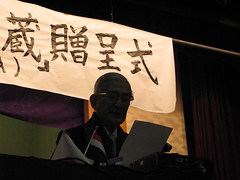
Acceptance Speech
御礼のご挨拶
First of all, I would like to express my deepest sorrow about the demise of Her Royal Highness Princess Galyani Vadhana Krom Luang Naradhiwas Rajanagarindra, Honorary President the World Tipiṭaka Presentation to Leading International Institutions worldwide.
I am happy and honoured to welcome all of you who have kindly visited Nagoya, Japan, a place so far away just a few days after the cremation of Her Royal Highness to present 40 volumes of the latest Pāḷi edition of the World Tipiṭaka Council in the Roman Script, for which I am sincerely grateful.
The study of the Pāḷi Tipiṭaka in Japan around the end of the 19th century started with the lecture by Professor Tagakusu Junjiro who had studied in England. Subsequently Professor Nangai Magato and Master Misuno Kogen, a teacher to whom I am greatly indebted, have developed it. Several universities such as Komazawa, Taisho, and Otani universities have produced quality personnel who have been doing researches until many Pāḷi researchers from all over Japan have collaborated and succeeded in translating the Pāḷi Tipiṭaka into Japanese called “Nandendaiso Scripture” consisting of 65 volumes and 70 issues.
Later when World War II ended in 1945 Japan was in a ruinous and pathetic state. I entered Tokyo University in 1947 and started to learn Pāḷi immediately. There were very few documents in the research room and no Pāḷi dictionary could be found. In 1960 I began to search for Pāḷi documents from all over the world and started to collect them since then. At present my library is the best source in Japan. Now that I have received the latest Pāḷi edition of the World Tipiṭaka Council in the Roman Script from Thailand, my research room is complete and I am elated. Thank you very much.
Now I would like to ask permission to clarify some points.
At the time when the Buddha was still alive (around 5-6 centuries before Christ) a powerful Kingdom in India was Māgadha. The Buddha might have spoken the ancient Māgadha language. Buddhist Theravāda Tradition in Southern India believes that the language has changed to Pāḷi. The word “Pāḷi” means “Scripture” but theoretically during the spread of Buddhasāsana from Magadha in East India to West India it could be said that Pāḷi was used as the language of the scripture three centuries before Christ. In the reign Emperor Ashoka, Buddhasāsana and Pāḷi spread from India to Sri Lanka and further on to Burma (present-day Myanmar), Cambodia, and Laos.
Not long after the Buddha had attained Nibbāna, 500 enlightened monks assembled at the holy cave. It was the first time that such a mass assembly took place to revise the Tipiṭaka. The Sixth Great Tipiṭaka Council in 1956 to commemorate the 2500th anniversary of the Buddhist Era took place in Yangon, Burma. A great number of Buddhist monks came from all the countries that have inherited Buddhist Theravāda Tradition. They compiled the Scripture by reciting the Tipiṭaka in unison. The outcome of that assemblage was the publishing of the Pāḷi Tipiṭaka in the Burmese script and this sixth revision was held to be the principal Scripture for Buddhist Theravāda Tradition. However, not long after the publishing of the Tipiṭaka, Burma underwent political changes so the project has not progressed since.
The latest Pāḷi edition of the World Tipiṭaka Council in the Roman Script from Thailand, even though based on the manuscript in the Burmese script, has also been compared with more than 18 scriptures published in various countries and analysed by over 50 technical experts in computer engineering who spent three years revising and editing it. It is Thailand’s gratifying and great project of the century. The organisation assigned to undertake the project was the M.L. Maniratana Bunnag Dhamma Society Fund under the Patronage of His Holiness the Supreme Patriarch of Thailand, supervised by its Chancellor, Major Suradhaj Bunnag, who has kindly joined today’s event.
From another approach, Buddhasāsana spread from the northwest of India via the Silk Road into China, Korea, and Japan, and was known as the Northern Buddhasāsana. Since the time of the Buddha, Buddhasāsana in India had split into several sects. The tradition of Buddhasāsana originated when the Buddha was alive had developed into Mahāyāna and Vajarayāna sects of Buddhasāsana. At the end of the 12th century Buddhasāsana disappeared from India. At present modern Buddhasāsana in India has been restored via Sri Lanka. A part of Mahāyāna Sect has spread southward, but the Southern Buddhasāsana has been propagated through the conservation of the original Buddhasāsana in the Pāḷi language.
As for the Northern Buddhasāsana, most of the Buddhist scriptures belonging to traditional Mahāyāna Sect used Sanskrit as the language of Dhamma. The original Buddhist Scripture conveying the teaching of the Buddha had been translated into the northern Chinese script as “Agama Sutra.” Since Mahāyāna Sect prospered a great deal, there had been numerous translations of Mahāyāna scriptures. Japanese researchers have always been seriously doing research on the birth and transmission of Mahāyāna Sect. There are several parts that are still not well known and all the Mahāyāna scriptures have not yet been assembled and summed up. The Pāḷi Tipiṭaka has been clearly compiled so we know that it is the authentic compilation of the Buddha’s teachings. Judging from the birth of this Pāḷi Tipiṭaka, it can be concluded that it is the principal scripture, the foundation derived from a direct transmission from the Buddha.
Buddhasāsana in Japan is divided into sects, each of which has its own founder. Thus, the Buddha is often forgotten. It is not necessary to emphasise that the Buddha gave birth to Buddhasāsana. No leader of any sect stands on his right-hand side. We should all reconsider this point. All sects of Buddhasāsana in the world hold the Buddha to be the most excellent, whether Dougenzenshi or Shinranshounin or Nichirenshounin, would agree with this truth.
I would like to return to where I left off. When we listen to the Pāḷi Tipiṭaka, we feel as if we were listening to the Buddha himself, for example, when he was delivering Dhamma Discourse to his disciples he would call them bhikkave, bhikkave. I think that this characteristic of the Buddha’s speech has been transmitted in the original without any adaptation.
After the Great East-Asian War Japan has re-established the country’s economic conditions. At the same time the Pāḷi research has also progressed, with valuable research works and many new translations being published on a regular basis. Most of them were translated from the books of Pali Text Socity in London. Later there were several translations from the Burmese script of the Great International Tipiṭaka Council (the Sixth Council in Burma). In the near future I absolutely hope that there will also be researches on and translations of this latest edition of the Great International Tipiṭaka Council in the Roman Script -- “The World Edition” -- from Thailand.
At present, the Pāḷi research in Japan has taken the Suttantapiṭaka, Vinayapiṭaka, and Dhammapitaka from the Tipiṭaka to be examined together with historical documents, documents concerning grammar, and relevant references. The research works and their Japanese translations are regularly publicized. We think that we would be able to present these references to you in the near future. I believe that reading the reference will enable one to deeply and correctly understand the Tipiṭaka from another perspective.
In general, each of the countries in Southeast Asia that adhere to Buddhist Theravāda Tradition would publish the Pāḷi Scripture in their own language, which is a normal practice for each country. When I was teaching graduate students of Pāḷi, I made them do a research on four types of scripts: Thai, Burmese, Sinhala of Sri Lanka, and Devanagari of India on their own for two years. After that they had to take a Pāḷi reading comprehension test twice a year or at the end of the first and second terms. My exams consisted of all four types of scripts, which was very depressing for the students. However, I think that from now on only two types of scripts, Thai and Sinhala, should be enough.
The publishing of this latest Pāḷi edition of the World Tipiṭaka Council in the Roman Script is the first of its kind accomplished by Asians as a meritorious project to disseminate the Buddha’s words to be known worldwide. I believe that Japan’s research, though a bit late, must be continually developed.
In 1988 there was a Pāḷi research in our own country. Researchers interested in Buddhist culture from all places assembled to found the Society for the Study of Pāḷi and Buddhist Culture. Academic seminars are organised annually and the society’s journal called the “Journal of Pāḷi and Buddhist Culture” is regularly issued. At present there are altogether 220 members including members from abroad. It is the only academic society in Japan with expertise in Pāḷi that joins the Science Council of Japan, an agency that organises activities under the Prime Minister’s Office. The society has set its sights on doing activities in the form of academic exchanges among a great number of researchers, with special interest in the Buddhist Theravāda Tradition in foreign countries.
Apart from academic research, the recent movement in Japan worth paying attention to is that the dynamic Buddhist Theravāda Tradition is continuously developing. I myself appreciate this movement and have been observing it with interest. In countries in Europe which is the world of Christianity, there are numerous temples, Dhamma and meditation centres in operation. In Asia, Islam and socialism have clashed, causing difficulty. As a participant in a research on Buddhasāsana, I care very much about the present situation.
Buddhasāsana has the Buddha as the founder. The Tipiṭaka is a sacred scripture that has directly transmitted the Buddha’s words. Buddhasāsana in countries around the world has started from the same point of origin and developed and spread worldwide, which at present the world has reached a time of crisis. What can Buddhasāsana offer to help rescue it from all perils? All the Dhammas concerning Morality from the Five Precepts, the Eight Precepts, the Four Noble Truths, to the Noble Eightfold Path are all very crucial. I would like to suggest the following four issues for consideration.
1. According to the Life of the Buddha, He was born, walked by himself on lotus blooms, meditated until he attained enlightenment and became the Buddha. From that time on he had become the Tathāgata who taught to render benefit to the world, human beings and non-human, the first and foremost Teacher who had made Buddhasāsana complete.
2. In a competitive society such as the one at present, it should be accepted that anyone who can win over himself should be considered a true “Jina” or conqueror according to the Buddha’s teaching.
3. People in the world have unanimously talked about sustainable development, but it should be accepted that man’s ability to repress his defilements and cravings and adhere to Santuṭṭhi or sufficiency is also a way leading to becoming a true human being just like the Buddha’s way of leading his life with only the three pieces of cloth and one begging bowl.
4. The worst situation in the world is waging war. We should accept the highest merit of Nibbāna that in the Buddha’s lifetime there were at least two times that he had learned from the effort to prevent war and bring peace to the world.
These are the four issues that I would like to present.
Even though the Spaceship called Earth which shares the same fate as all human beings should come to the worst, I believe that the thing which can show the way to real happiness is the Pāḷi Scripture. All Buddhists should trace their way back to the foundation of Dhamma in the Pāḷi Scripture taught by the Buddha and search until they find Buddhasāsana in a new perspective from that point.
The 40-volume Pāḷi Tipiṭaka is deemed as mankind’s truly invaluable treasure. I would like to express my sincerest respect and thanks for your goodwill and perseverance in bringing them to Nagoya, Japan, which is such a faraway place.
Finally, I hope that the presentation of the latest Pāḷi edition of the World Tipiṭaka in the Roman Script will create a firmer bond between Thailand and Japan. I would like to thank representatives from the Japan Theravāda Buddhist Association who have dedicated themselves to coordinating with the city of Nagoya and the various institutions and universities in Tokyo and Kansai District. My special thanks go to President of the Japan Theravāda Buddhist Association, Mr. Junichi Konishi, who has always been giving his support.
21 November 2008
Maeda Kegakku
President of the Society for the Study of Pāḷi and Buddhist Culture
パーリ学仏教文化学会会長
前田恵學
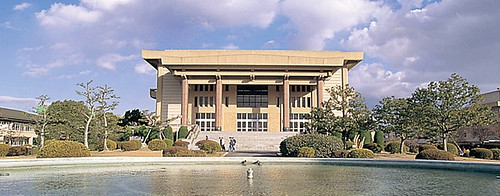
Wednesday, December 3, 2008
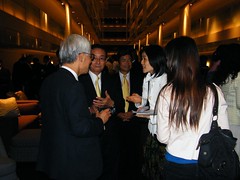
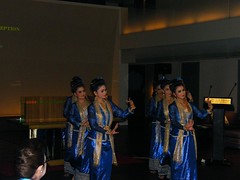
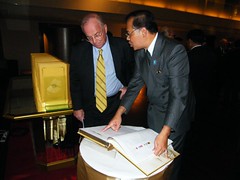
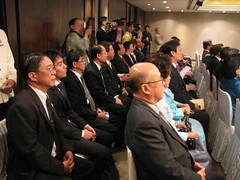
Tipitaka Press Conference and Reception
Tipiṭaka Press Conference
and
Reception for Tipiṭaka Patrons from 10 Institutes from 10 Countries
On the Occasion of
The Tipiṭaka Presentation to 10 Institutions
in Memory of
Her Royal Highness Princess Galyani Vadhana of Thailand
Patron of the World Tipiṭaka
November 13, 2551 at 18.30
Nai Lert Park Hotel : A Raffle International Bangkok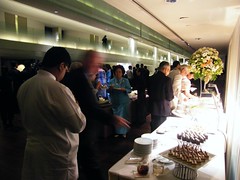
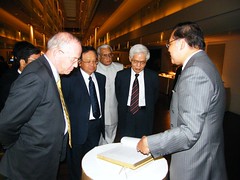
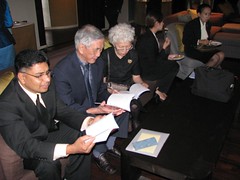
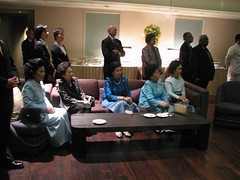
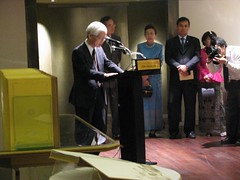
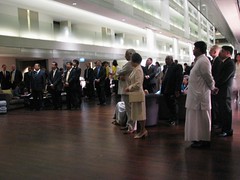
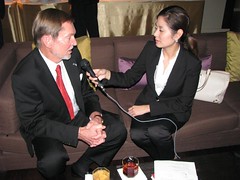
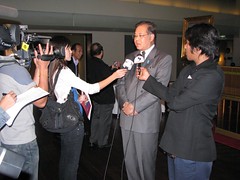
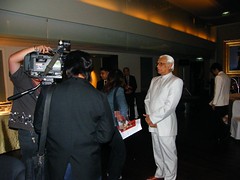
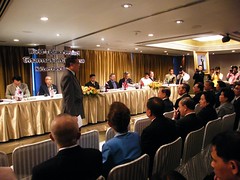
World Tipiṭaka Reception Address
by Maj. Suradhaj Bunnag
Chancellor of Dhamma Society & President of the World Tipiṭaka Project
and
Advisor to the World Tipiṭaka Recitation Ceremony
at the Bangkok Metropolitan Administration
in Memory of H.R.H. Princess Galyani Vadhana
Your Excellencies, Ladies and Gentlemen:
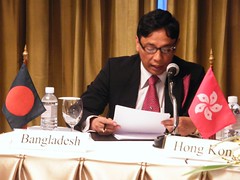
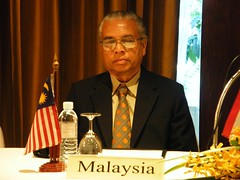
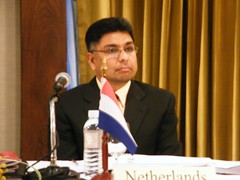
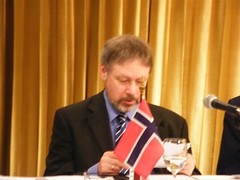
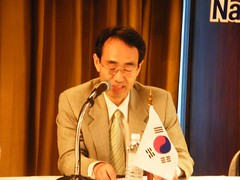
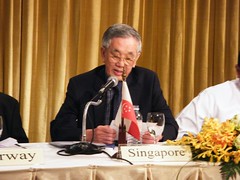
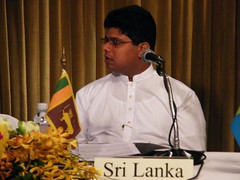
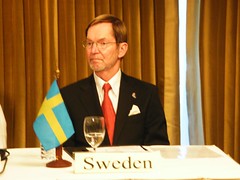
I am happy to welcome you all to this Tipiṭaka Preview and Reception. Warmly welcome especially to Their Excellencies the Ambassadors of Sweden, Sri Lanka, Japan, and Republic of Korea.
Today the representatives of ten leading institutions from Asia and Europe have arrived in Bangkok to accomplish three purposes:
(1) to receive the World Tipiṭaka in the Roman Script;
(2) to participate at the World Tipiṭaka Recitation;
(3) to attend the Royal Cremation Ceremony.
Tomorrow the Constitutional Court of Thailand will organize the World Tipiṭaka Presentation and the Bangkok Metropolitan Administration together with the Dhamma Society will organize the World Tipiṭaka Recitation in memory of Her Royal Highness Princess Galyani Vadhana, the Patron of the World Tipiṭaka.
The Tipiṭaka is the world heritage containing the message of wisdom and peace. It has been preserved in Asia in Pāḷi language written in national scripts.
The Dhamma Society is a small private organization under the patronage of His Holiness the Supreme Patriarch of Thailand. Because of the dedication of the patrons and the use of modern technology, the Dhamma Society completed its first main task in 2005, the production of the World Tipiṭaka in Roman Script based on the resolution of the International Tipiṭaka Council held over 50 years ago. Since then the Dhamma Society has continued its second main task, the presentation of the World Tipiṭaka, by presenting the 40-volume of the World Tipiṭaka to leading institutions, by developing web-based technology to access to the electronic Tipiṭaka, and by organizing the Tipiṭaka Recitations.
Tipiṭaka Recitation is a wisdom-based activity. From the Tipiṭaka, all participants derive wisdom, happiness, and peace by reciting together the words of the Buddha while reflecting on their meanings. For this, the Tipiṭaka Recitation Manuals based on the Roman-script World edition are produced and distributed as a gift of Dhamma. Tomorrow, the whole country joins in reciting from the World Tipiṭaka in Roman Script. I thank the Bangkok Metropolitan Administration for publishing one million copies of the World Tipiṭaka Recitation Manual and also organizing this mega event in memory of Her Royal Highness Princess Galyani Vadhana, Royal Patron of the World Tipiṭaka.
It is our expectation that through this meritorious act, millions of people in Thailand and the Tipiṭaka patrons from various countries will realize that the great potentiality of the World Tipiṭaka in Roman Script in maintaining lasting peace and wisdom in the world, the vision of the late Pincess Galayani Vadhana and also her grandfather, King Chulachomklo of Siam, who published the world’s first Tipiṭaka edition in 1893. It is the mission of the World Tipiṭaka Council as well. Therefore, I expect the Recipients of the World Tipiṭaka to utilize the potentiality of the World Tipiṭaka for the benefit of the world. Let us work together to accomplish this noble mission.
May Her Royal Highness achieve the supreme bliss of Nibbāna.
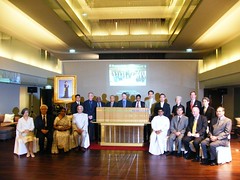
Tuesday, December 2, 2008
Tipiṭaka Press Conference
งานแถลงข่าว
และ
งานเลี้ยงรับรองต้อนรับผู้แทน 10 สถาบัน
ที่จะรับมอบพระไตรปิฎกสากลเป็นพระธัมมทาน
วันพฤหัสบดีที่ 13 พฤศจิกายน 2551 เวลา 18.30 น.
โรงแรมปาร์คนายเลิศ แรฟเฟิลส์ อินเตอร์เนชั่นแนล ถนนวิทยุ กรุงเทพมหานคร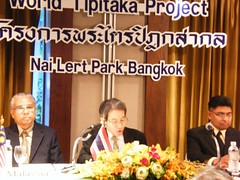

"ประโยชน์" และ "กุศล"
จากการอ่านสังวัธยายพระไตรปิฎกสากล เพื่อถวายเป็นพระราชกุศล
ณ ลานคนเมือง ศาลาว่าการกรุงเทพมหานคร
โดย ประสิทธิ์ เสกสรรค์
เลขาธิการกองทุนสนทนาธัมม์นำสุขฯ ในพระสังฆราชูปถัมภ์ฯ
“ปาฬิ” เป็นภาษาพระธัมม์ที่พระพุทธเจ้าทรงใช้สั่งสอนพุทธบริษัท ซึ่งต่อมาได้มีการรวบรวมเป็นหมวดหมู่ เรียกว่า “พระไตรปิฎกปาฬิ” มีการอนุรักษ์ท่องจำปากต่อปากเป็นเวลาไม่น้อยกว่า 400 ปี จึงได้บันทึกเป็นลายลักษณ์อักษรเป็นครั้งแรกในศรีลังกา และต่อมาได้บันทึกเป็นอักษรของชาติต่างๆ ทั่วโลก การมีต้นฉบับพระไตรปิฎกปาฬินี้ทำให้การแปลเป็นภาษาต่างๆ มีมาตรฐานเป็นสากล ซึ่งชาวโลกสามารถใช้พระไตรปิฎกปาฬิชุดนี้เป็นหลักได้ ที่สำคัญคือพระไตรปิฎกสากลฉบับนี้ได้จัดพิมพ์ชุดสมบูรณ์เป็น “อักษรโรมัน” ซึ่งเป็นอักษรสากลที่ใช้กันอยู่อย่างแพร่หลายในปัจจุบัน ทำให้สามารถอ่านสังวัธยายได้ทั่วโลก คำว่าสังวัธยาย (สัง-วัธ-ธะ-ยาย) แปลว่าเปล่งเสียงพร้อมกัน
พิธีอ่านสังวัธยายพระไตรปิฎกสากลที่ลานคนเมือง ศาลาว่าการกรุงเทพมหานคร เนื่องในพระราชพิธีพระราชทานเพลิงพระศพสมเด็จพระเจ้าพี่นางเธอ เจ้าฟ้ากัลยาณิวัฒนา กรมหลวงนราธิวาสราชนครินทร์ องค์อุปถัมภ์พระไตรปิฎกสากล ในวันที่ 14 พฤศจิกายนศกนี้ เปิดโอกาสให้ประชาชนได้มีโอกาสร่วมพิธีอ่านสังวัธยายพระไตรปิฎกสากล อันเป็นกิจกรรมสาธารณประโยชน์ที่สำคัญและเป็นการบำเพ็ญกุศลที่ล้ำเลิศในทางพระพุทธศาสนา น้อมถวายแด่องค์อุปถัมภ์พระไตรปิฎกสากล โดยมีรายละเอียดดังนี้
1. ประชาชนทุกคนสามารถมีส่วนร่วมในงานได้
งานพระศพเป็นงานบำเพ็ญกุศลสำคัญ ตามประเพณีพุทธศาสนาการบำเพ็ญกุศลเกี่ยวกับพระไตรปิฎกเป็นบุญกิริยาอันประเสริฐ เพราะพระไตรปิฎกคือองค์พระบรมศาสดา ดังนั้นการอ่านสังวัธยายพระไตรปิฎก ซึ่งเป็นพระพุทธพจน์ของพระสัมมาสัมพุทธเจ้าที่สืบทอดมาโดยไม่มีการเปลี่ยนแปลงกว่า 2,500 ปี จึงเป็นบุญกิริยาที่ล้ำเลิศ เพราะเป็นการรักษาพระธัมม์อันบริสุทธิ์ให้ยืนนาน
การอ่านออกเสียงพระไตรปิฎกภาษาปาฬิ หรือ ภาษาพระธัมม์ และภาคแปลภาษาไทยจากพระไตรปิฎกสากล ฉบับที่สมเด็จกรมหลวงนราธิวาสราชนครินทร์ทรงอุปถัมภ์การพิมพ์และเผยแผ่จึงเป็นการมีส่วนร่วมบำเพ็ญกุศลโดยตรงถวายแด่สมเด็จกรมหลวงนราธิวาสราชนครินทร์
พิธีอ่านสังวัธยายพระไตรปิฎกสากล (World Tipiṭaka Recitation) เพื่อถวายเป็นพระราชกุศล ณ ลานคนเมือง ศาลาว่าการกรุงเทพมหานคร เป็นมีการอ่านสังวัธยายพระไตรปิฎกสากล ภาษาปาฬิ และภาคแปลภาษาไทย รวม 12 บท โดยแสดงการอ่านพิเศษเป็นตัวอย่าง 4 บท สำหรับบทอื่นๆ อีก 8 บท สามารถศึกษาเพื่อใช้อ่านสังวัธยายเพิ่มเติมโดยผ่านสื่อเทคโนโลยี 5 ชนิด คือ
1.1 สื่อสิ่งพิมพ์ ได้แก่ คู่มืออ่านสังวัธยายพระไตรปิฎกสากล ซึ่งกรุงเทพมหานครได้จัดพิมพ์พุทธพจน์ ทั้ง 12 บท เป็นหนังสือจำนวน 1 ล้านเล่ม สำหรับมอบเป็นธัมมทานแก่ประชาชนชาวกรุงเทพมหานคร และประชาชนชาวไทยทั่วประเทศเพื่อใช้เป็นคู่มืออ่านสังวัธยายถวายเป็นพระราชกุศล
1.2 สื่อวิทยุและโทรทัศน์ ได้แก่ การถ่ายทอดภาพและเสียงพิธีอ่านสังวัธยาย โดยเฉพาะบทตัวอย่าง 4 บท ซึ่งในสื่อโทรทัศน์จะปรากฏอักษรประกอบการออกเสียงด้วยสำหรับสื่อวิทยุจะถ่ายทอดเสียงอ่านสังวัธยายพระไตรปิฎฏซึ่งประชาชนสามารถออกเสียงตามได้ และถ้ามีคู่มือก็สามารถอ่านตามได้ทุกคนไม่ว่าจะอยู่ในสถานที่ใดทั่วประเทศ
1.3 สื่ออินเตอร์เน็ท ได้แก่ การเผยแผ่ข้อมูลดิจิทัล ทั้งภาพและเสียงทางเว็บไซต์หลักของ กทม. www.bangkok.go.th กองทุนสนทนาธัมม์นำสุขฯ www.dhammasociety.org
1.4 สื่อโทรศัพท์มือถือ ได้แก่ การเผยแผ่เสียงสังวัธยายเพื่อฝึกซ้อมสำหรับแต่ละบุคคลทางโทรศัพท์มือถือ ซึ่งสามารถ download จากเว็บไซด์หลักของการจัดงานสังวัธยาย www.bangkok.go.th และ www.dhammasociety.org
1.5 สื่ออิเล็กทรอนิกส์ DVD ได้แก่ การเผยแผ่แผ่น DVD ต้นแบบเสียงสังวัธยาย ซึ่งโครงการพระไตรปิฎกสากลได้จัดทำขึ้นเป็นพิเศษเพื่อมอบแก่กรุงเทพมหานครนำไปใช้ในพิธีอ่านสังวัธยายพระไตรปิฎกสากล ณ ลานคนเมือง และทุกเขตในกรุงเทพมหานคร ตลอดจนทุกจังหวัดทั่วประเทศไทย โดยสามารถนำสื่อ
DVD นี้ไปเผยแพร่เป็นภาพและเสียงเป็นตัวอย่างในงานที่มีผู้ร่วมชุมนุม โดยมีผู้นำอ่านสังวัธยายเป็นตัวอย่าง ให้ประชาชนอ่านสังวัธยายตามได้
2. พระไตรปิฎกที่ใช้อ่านสังวัธยายเป็นภาษาปาฬิพิมพ์ด้วยอักษรโรมันจากต้นฉบับสากล
การใช้พระไตรปิฎกสากลเป็นต้นฉบับ ทำให้สามารอ่านสังวัธยายพระไตรปิฎกได้เหมือนกันหมดทั่วโลก เป็นการรักษามาตรฐานสากลของพระไตรปิฎกปาฬิ และเป็นการนำพระไตรปิฎกปาฬิมาใช้ในชีวิตเพื่อบำเพ็ญกุศลได้โดยตรง ความเป็นสากลนี้ทำให้มีผู้อุปถัมภ์พระปิฎกสากลจากประเทศต่างๆ มาร่วมพิธีอ่านสังวัธยายพระไตรปิฎกสากล ณ ลานคนเมือง ศาลาว่าการกรุงเทพมหานครด้วย
3. ประชาชนสามารถอ่านสังวัธยายพระไตรปิฎกได้อย่างถูกต้อง
การอ่านสังวัธยายเป็นการอ่านออกเสียงพระไตรปิฎกเป็นภาษาปาฬิ และภาคแปลเป็นภาษาไทย ซึ่งในงานจะมีผู้อ่านนำทั้งภาษาปาฬิและภาคแปลภาษาไทยในแต่ละบรรทัด ให้ผู้ร่วมงานอ่านตามได้เป็นอย่างดี กรุงเทพมหานครได้จัดสังวัธยายพระไตรปิฎกมาแล้วโดยมีผู้ร่วมงาน 5,000 คน ซึ่งแม้ผู้ไม่เคยสังวัธยายมาก่อน เมื่อมีผู้อ่านนำและคู่มือการอ่านก็สามารถร่วมอ่านสังวัธยายพระไตรปิฎกสากลได้ การร่วมอ่านสังวัธยายเป็นหมู่คณะเป็นการแสดงความสามัคคีที่เป็นกุศลเพื่อถวายเป็นพระราชกุศล
4. ประชาชนสามารถนำการอ่านสังวัธยายไปใช้เป็นแบบอย่างในการบำเพ็ญกุศลได้ในอนาคต
โดยนำพระพุทธพจน์ทั้ง 12 บทที่บันทึกอยู่ในสื่อต่างๆ ได้แก่ สื่อสิ่งพิมพ์ เว็บไซต์ โทรศัพท์มือถือ และแผ่น DVD ที่บันทึกระหว่างพิธีอ่านสังวัธยาย ไปปฎิบัติในงานบำเพ็ญกุศลอื่นๆ ในอนาคตได้ เป็นการปฎิบัติตามแนวทางพระพุทธศาสนาเถรวาทในการสืบทอดพระธัมม์คำสอนตรงตามต้นฉบับพระไตรปิฎก ซึ่งได้มีการสืบทอดโดยการท่องจำ สวดทาน และอ่านสังวัธยายโดยพระอรหันตสาวก และอุบาสกและอุบาสิกาตั้งแต่อดีตจนถึงปัจจุบัน
Subscribe to:
Posts (Atom)