Monday, March 6, 2006

Tipiṭaka in the Sri Lankan Parliament

Tipiṭaka Acceptance Speech
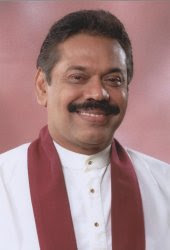

His Excellency Mahinda Rajapaksa
President of the Democratic Socialist Republic of Sri Lanka

On the occasion of
The Presentation of the Royal Donation
The Buddhist Era 2500 Great International Council Pāḷi Tipiṭaka
40 Volumes in Roman Script

for
The Parliament of Sri Lanka, Colombo
March 6, B.E. 2549 (2006)



(Translation)

Rear Admiral His Serene Highness Prince Pusarn Swasdiwat,
Delegation of Royal Tipiṭaka Pilgrimage from Thailand,
Honorable Speaker,
Members of the Parliament,
Distinguished Invitees, Ladies and Gentlemen,


On behalf of the People of Sri Lanka, let me first express my sincere appreciation and heart-felt gratitude to Her Royal Highness Princess Galyani Vadhana, elder sister of His Majesty the King of Thailand for the goodwill gesture extended to my people and country through the generous presentation of the very first inaugural edition of the Buddhist Era 2500 Great International Council Pāḷi Tipiṭaka Edition in English Script to the President of Sri Lanka a year ago and to the Parliament of Sri Lanka today, the first anniversary day.

This royal presentation comes as a blessing to my country at a time my country is seriously engaged in finding a sustainable and peaceful political settlement. This year, we celebrate the 2550th year of Buddha-jayanti. This royal presentation reminded me and my government the centrality of the study and practice of the Tipiṭaka, the supreme teachings of the Buddha, in all our undertakings and negotiations. For me, this royal gift also marks the celebration of the 2550th year of Dhamma-jayanti of the first compilation of the Tipiṭaka at the first Great Council held in ancient India just after the Buddha's passing away.

From its inception, the Tipiṭaka, the universal and sacred scriptures of the Buddasāsana, and Pāḷi, its sublime language, enlightened the Asian civilization. It is through the Tipiṭaka and the bearers of the Tipiṭaka that both South Asia and Southeast Asia learned to read and write, found peace and prosperity, and developed cultural and friendly ties among civilized countries of the world.

It is at the fourth Great Council held in Sri Lanka in the first century BC that the Tipiṭaka was first committed to writing. The written Pāḷi Tipiṭaka continued for several centuries under the patronage of the kingship of Sri Lanka and it is through the dedicated effort of our forefathers that Sri Lanka was able to present the greatest Dhamma gift, the Pāḷi Tipiṭaka in Sinhalese script, to the world. This greatest gift resulted in the preservation of the supreme Tipiṭaka in its completeness and purity in Sri Lanka, Thailand and Burma. Out of all Great Councils, the first international council that was held in Burma (Myanmar) from 1954 to 1956 was really the international council in the true sense of the word for it is at this council the erudite Buddhists from all Theravāda countries participated in producing the Universal Tipiṭaka, popularly known as the Chaṭṭhasaṅgīti Edition which was originally printed in Burmese script.

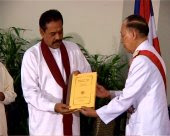
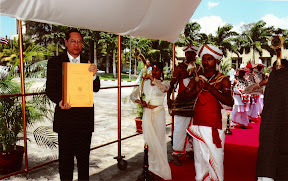
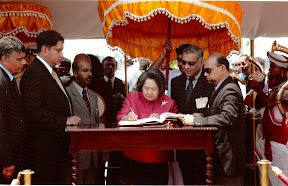
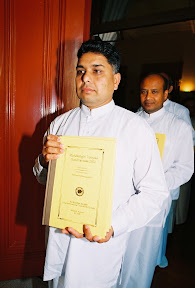
After 50 years, at this technologically advanced modern world of ours, we are participating in a globally significant event. Today both Sri Lanka and Thailand turned a new chapter in the religious history of Buddhism and also in the profound political history of the world. Her Royal Highness, the Princess Galyani Vadhana of the Kingdom of Thailand, through her royal envoy His Serene Highness Prince Pusarn Swasdiwat, presented the first Universal Pāḷi Tipiṭaka Edition in the international script of English alphabet to the Parliament of Sri Lanka. This symbolic act made Sri Lanka the first country in the world to incorporate the greatest wisdom of the Tipiṭaka to the modern-day political institution of Parliament.

The Pāḷi Tipiṭaka that is presented and enshrined at the august assembly of this Parliament is the internationally agreed Tipiṭaka Edition of the Buddhist Era 2500 (1956) and here it comes in 40 volumes, and also as the most perfect and complete version. The Dhamma Society Thailand has successfully endeavored not only to find and publish the actual resolution of the Great International Council of 1956 but also to proof-read thoroughly to remove all printing and editorial errors by employing the recitation, the Buddhist method of proof-reading, as well as the most advanced Information Dhamma Technology. A period of six years has been utilized to complete the proof-reading task and the preparation of the standard electronic database. This alone shows the magnanimity of the project.

Therefore, on behalf of the people of Sri Lanka and the Buddhists all over the world, I highly appreciate this generous gift on the part of the Royal Family of Thailand and extend my and my country's fullest support for the preservation and the presentation of this greatest wisdom of the supreme Buddha to the world at large. I also assure this audience that, in cooperation with the Kingdom of Thailand and the rest of the world, my government and I will do our best to declare this day, March 6, as the "World Tipiṭaka Day".

May the world find sustainable peace and prosperity through the study and practice of the supreme teachings of the Buddha !

Monday, September 26, 2005

World Tipitaka Inaugural Message

Royal Message


H.R.H. Princess Galyani Vadhana
Krom Luang Naradhiwas Rajanagarindra of Thailand

Royal Tipiṭaka Patron
and
Honorary President of Tipiṭaka Presentation Worldwide

On the Inauguration of
The Buddhist Era 2500 Great International Council Pāḷi Tipiṭaka
40 Volumes in Roman script

Graciously Presented as a Donation to
International Institutes in Sri Lanka, Thailand and Sweden


(Translation)


I am delighted and profoundly honoured to present a special inauguration 40-volume Pāḷi Tipiṭaka in Roman-script edition to leading institutions worldwide. This occasion is especially meaningful because this publication is the world’s first International Romanised Pāḷi Tipiṭaka -- from the only Great International Council, convened by 2,500 Theravāda Buddhist monks in the Buddhist Era 2500 or 1956 A.D. It is, therefore, a Heritage of Humanity Enlightenment which has been preserved for over 2500 years.

The three inaugural Pāḷi Tipiṭaka edtions were published in 2005 by the Dhamma Society under the Patronage of the Supreme Patriarch of Thailand. The first inaugural edition was presented to the people of Sri Lanka on March 6, 2005. I went on a Pilgrimage to Colombo upon the invitation of the President of Sri Lanka for the presentation of the special edition which is now preserved at the Presidential Mansion in Colombo. The special edition for the Kingdom of Thailand was presented to the people of Thailand on August 15, 2005 and is now preserved at the Constitutional Court of the Kingdom of Thailand in Bangkok. The special edition for the western world was presented on September 13, 2005 to the Kingdom of Sweden and is now preserved at the Uppsala University Library.

The presentation of the International Romanised Pāḷi Tipiṭaka is a meritorious act following the publication of the Tipiṭaka in Siam-script edition by my Grandfather, King Chulalongkorn Chulachomklao of Siam, who in 1893 had the Pāḷi Tipiṭaka printed in book form for the first time in the world. Over two hundred and sixty of these sets were presented to leading institutions worldwide. In Sri Lanka and Sweden, one set of these historic printings “Chulachomklao the Great of Siam Pāḷi Tipiṭaka” has been well-preserved both in the temple of the Holy Tooth Relics in Kandy and at the Carolina Rediviva in Uppsala.

After this inauguration, one thousand sets will be presented as a donation to leading institutions worldwide. Furthermore, the International Tipiṭaka Studies will be initiated as an integral part of the presentation. The International Tipiṭaka Studies in these leading institutions will integrate the wisdom-base in the Tipiṭaka with the knowledge-base of the world today. It is hoped that the integration and right understanding of the Pāḷi Tipiṭaka will ensure sustainable peace, as well as lasting security for the international community today.

May the merits of the International Tipiṭaka printing and the presentation bring wisdom, life-long happiness and prosperity to the people of the world, now and always.


Bangkok
September, B.E. 2548 (2005)


Monday, June 13, 2005

World Tipitaka Edition in Sweden

A Welcome Speech


Dr. Ulf Göranson

Professor of Law & Chief Librarian, Uppsala University

On the occasion of
The Presentation of the Royal Donation
The Buddhist Era 2500 Great International Council Pāḷi Tipiṭaka
40 Volumes in Roman Script

for
The Carolina Rediviva, Uppsala University, Sweden
September 13, B.E. 2548 (2005)


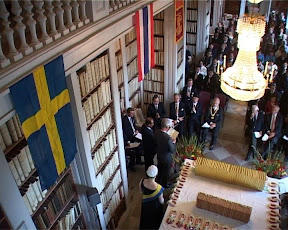
A warm welcome to Uppsala University and its Library. We have all come together today to take part in a Royal Donation to Sweden and to this its oldest seat of learning with a library worthy of its mother institution. The gift we are about to receive - the Pāḷi Tipiṭaka in Roman script - is one of the most exquisite ever bequeathed upon us.

Already more than 100 years ago, in 1895, Uppsala University Library received a copy of King Chulalongkorn Chulachomklao's first printed edition of this sacred text, then in Siamese script. It was a great effort, in its time, to transform the text from its numerous manuscript sources in various Asian scripts, the Pāḷi language never having received a script of its own. However, Uppsala was not the only recipient of these fine volumes. No less than 260 learned institutions all over the world received one. And to Thai monasteries 500 sets were given. It is a sad fact that books do not live well in the tropical climate. I learnt yesterday at a most informative presentation in Stockholm that today only one single full set of the 1893 edition has survived in Thailand.

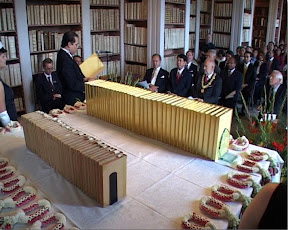
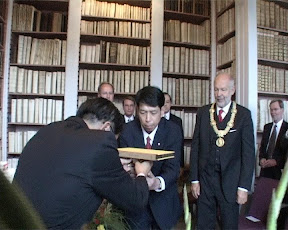
Was the old Royal donation a very prestigious gift to honour and preserve, the edition which soon will be presented to us is of an extraordinary quality. It is one of only three existing sets, the other two being already transferred to Thailand and Sri Lanka, where they are kept in the Constitutional Court and the Presidential Palace, respectively. For the Library it is truly difficult to find the right words of gratitude and appreciation of having received the honour to be the third place where the 40 volumes will be kept. We shall soon see them carried in.

The two Royal gift editions of Pāḷi Tipiṭaka will be kept in this shrine of the Library, the Book Hall. It is fitting and becoming, since they follow a tradition since the founding in 1620 of the Library. This room represents the many donors - kings, queens, magnates in heritage and fortune, and more ordinary patrons of learning and research - whose benevolence and generosity have been essential for the building of a great library collection.

Six centuries of printing form the necessary basis of mankind's knowledge, culture, humanity, and religious believes. Around the walls of this room we can find both landmarks in all these directions and works now since long forgotten but evidently of importance at the time of their printing. Today, the electronic medium has arrived as a powerful complement to the printed text. The Pāḷi Tipiṭaka Project has, besides printing beautiful books, also taken full advantage of the unprecedented efficiency and dissemination capacity of the new technique.

The Pāḷi Tipiṭaka and the religion of which it constitutes the sacred text and learning has its roots more than 2500 years ago. It is both scaring and fascinating to compare the standards of southern Asia in those days with what took place in this part of the world. It is in no ways to our favour. We had then just started to understand the use of iron for better tools and weapons. But it was very long before any written sources appeared to give later generations a picture of what went on in the minds and believes of the population here. We can, however, be quite sure that intellectual enhancement, refinement and humanity were no concepts of high esteem for our forefathers in times of the Buddha...

Sunday, March 6, 2005

A Tipiṭaka Pilgrimage Log


A Tipiṭaka Pilgrimage Log


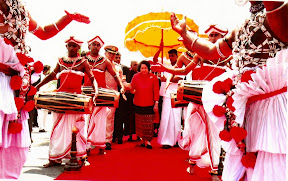
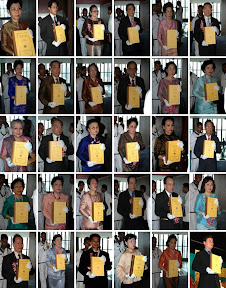
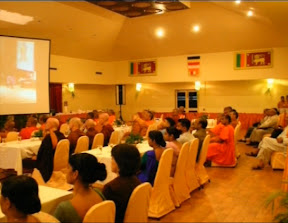
In the afternoon of Sunday March 6, B.E. 2548 (2005) at the Bandaranaike Memorial International Conference Hall in Colombo, Sri Lanka, a new chapter in history of the Buddhasāsana was created when the inaugural set of the world's first complete Pāḷi Tipiṭaka edition in Roman script was brought from Thailand to the hall. Amidst traditional drumming and dancing escorted by children and navy personnels, the 40-volume Tipitaka was reverently placed on the center table of the stage, in front of the altar to the white Buddha statue, by 80 pious members of the Dhamma Society of Thailand, headed by Major Suradhaj Bunnag, the Chancellor of the M.L. Maniratana Bunnag Dhamma Society Fund under the Patronage of His Holiness Somdet Phra Ñāṇasaṃvara, the Supreme Patriarch of Thailand. To witness this historic state ceremony organized by the Ministry of Foreign Affairs and the Dhamma Society of Sri Lanka, a large gathering of over 1,000 distinguished people, headed by the Most Venerable Tibbatuwawe Sri Siddhartha Sumangala, the Supreme Patriarch of Sri Lanka's Syāmopāli Mahānikāya, were present


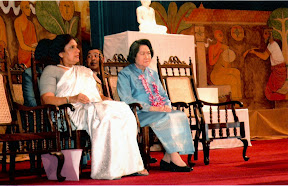
Both Her Royal Highness Princess Galyani Vadhana Krom Luang Naradhiwas Rajanagarindra, elder sister of His Majesty the King of Thailand, and Her Excellency Chandrika Bandaranaike Kumaratunga, the President of the Democratic Socialist Republic of Sri Lanka, appeared on the stage at around 4:00 pm. With the observance of the Five Precepts, the lighting of the traditional oil lamp, and the offering of flowers to the Buddha, the ceremony began. After the addresses by the Most Venerable Supreme Patriarch of Sri Lanka, and Princess Galyani Vadhana of Thailand , the ceremony reached its highpoint when Her Royal Highness the Princess of Thailand presented Volume No. 29 of the sacred Pāḷi Tipiṭaka to Her Excellency the President of Sri Lanka. After the address of Her Excellency Chandrika Bandaranaike Kumaratunga of Sri Lanka and presentation of a traditional symbolic gift to Her Royal Highness by the President, the National anthems of both countries were sung to mark the conclusion of the ceremony as well as the beginning of a new era of strong relationship and cooperation between the two states.


While sitting in the audience, I really apreciated the proceedings of the ceremony because I understood well that:
  1. This Roman-script edition is a gift of Dhamma from the people of Thailand to the people of Sri Lanka and subsequently to the world.
  2. This edition contains the Buddha's original message as preserved by the Theravāda Buddhist Tradition in a language belonging to Middle Indo-Aryan, known originally as Māgadhī (the language of Magadha) and now as Pāḷi (the language of the Sacred Buddhist "Text") .
  3. The name of the present edition is "Mahāsaṅgīti Tipiṭaka Buddhavasse 2500" because this edition is the end product of the Buddhist Era 2500 Great International Council held at Pāsāṇa Cave, Yangon, Myanmar, during the years 1954 to 1957, with the participation of 2,500 erudite Theravāda Buddhist monks representing all forms of local traditions of Theravāda Buddhist countries of the world, such as Sri Lanka, Myanmar, Thailand, Laos, and Cambodia.
  4. This is the world's first complete Pāḷi Tipiṭaka set in Roman alphabet or Romanised script. Unlike others, it has 40 volumes in complete form as they have been handed down by the last Great International Council within Theravāda tradition, in B.E. 2500 (1957).
  5. The editorial works of this present Romanised Pāḷi Tipiṭaka took place during a 5 year period, from B.E. 2542 to 2548 (1999 to 2005). During this period, His Holiness Somdet Phra Ñāṇasaṃvara the Supreme Patriarch of Thailand, who has written the benediction to the new Roman-script edition, has extended his fullest support and approval by giving blessings and guidance to the project. Published in honour of His Majesty Bhumibol Adulyadej, the Buddhist Sovereign Monarch of Thailand, this edition also carries patronage from members of the royal family and the presentation also marks the 112th year of the printing of the world's first Pāḷi Tipiṭaka edition in B.E. 2436 or 1893 A.D. in Siam-script edition by King Chulachomklao the Great of Siam.
  6. The Dhamma Society Thailand in the process of this new edition has reintroduced the Tipiṭaka culture in Thailand and in other Theravāda countries that once prospered under royal patronage of old. This time, the Dhamma Society has been supported by the patrons not only from the Matriarch of the Royal Family of Thailand, the Saṅgharājā and monastic community but also from both leaders of academic and business communities in Thailand.


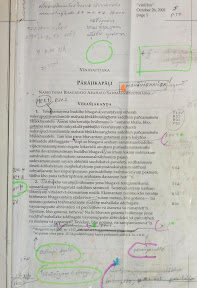
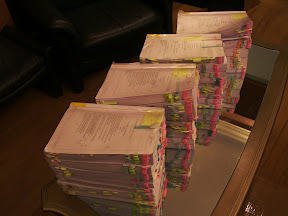
  7. In the editing process, the Dhamma Society has utilized an integrated multi-disciplinary approach : a collective work of pious experts from various disciplines. Among many important processes, the Tipiṭaka and Pāḷi experts have recited the entire 40-volume set thrice to verify the readings. The experts in computer engineering have used new and advanced technology, titled "Dhamma Technology", to ensure the accuracy of the text. In the process, the computer experts assisted in discovering over 40,000 significant anormalies and primary printing mistakes of the original manuscripts utilized for the purpose. In the editing process of the 40 volumes, containing 2,708,706 Pāḷi words in 20,606,104 Roman letters, 80,000 hours have been utilized in the proof-reading and an additional 10,000 hours to prepare the electronic Pāḷi Tipiṭaka version between 2002-2005.


  8. The Dhamma Society is forthright and sincere in all its dealings and this is evident from its Project Archives. It has recorded all key events in the process of editing the Tipiṭaka in over 500 hours of video recording, creating a digital video documentary archive of over 6,500 gigabytes. In addition, the Project Achieves also contains 7 drafts of the 40-volume set, all together totaling 280 volumes, or about 140,000 pages or 220 megabytes of an electronic Pāḷi Tipiṭaka. All these demonstrate the visible energy and time that the experts put into this mammoth project.


  9. The Dhamma Society publication is not just another edition added to the Pāḷi Tipiṭaka collection. This publication is the resolution of the one and the only Great International Council convened between 1954-1957. Moreover it is a newly edited version free from previous printing mistakes with the original manuscript which has never been printed before. In comparison to the local editions of Myanmar, Sri Lanka and Thailand, this international edition transcends local boundaries and biases. Unlike the edition of the Pali Text Society (England), this Roman-script edition contains no speculative and imaginative reading of words by individual scholars into the holy scripture of the Tipiṭaka. Unlike the PTS edition in which some texts were formed based on a single manuscript or two, all volumes in this Pāḷi Tipiṭaka in Roman script contain the agreed readings at the Great International Council by 2500 pious and erudite Buddhist monks from the Theravāda Tradition.
  10. The Dhamma Society expects to present 1,000 sets of this Pāḷi Tipiṭaka edition to some leading institutions around the globe, with the priority given to those where 260 sets of the world's first printed Siam edition of 1893 A.D. are well preserved. It expects to present the special set of the Pāḷi Tipiṭaka in Roman script, the first in the Western world, to the Uppsala University of Sweden, one of the leading institutions in Europe, as a Royal Gift of Humanity from Thailand to the people of Europe and to the world.

My colleagues and I who attended this State Ceremony of the auspicious presentation of the Greatest Dhamma Gift to the people of Sri Lanka by the people of Thailand, left the event full of memories, joy and heart-felt thankfulness, most of all to Her Royal Highness Princess Galyani Vadhana, Honorary President of the Tipiṭaka Presentation to Leading Institution Worldwide. My special thanks also to the members of the Dhamma Society of Thailand as well as to Mr. Senaratne, the Tipiṭaka Patron and the Chancellor of the Dhamma Society of Sri Lanka, for inviting my colleagues and myself to take part in the World Tipiṭaka project and in the Royal Pilgrimage for the Tipiṭaka Presentation Ceremony.

May this great meritorious act of spreading the wisdom-based message of the Buddha become a causal connection in turning the world in the direction of peace!


G.A. Somaratne, Ph.D.
Head / Department of Pāḷi and Buddhist Studies
University of Peradeniya, Peradeniya, Sri Lanka
March 22, B.E. 2548 (2005)

Sunday, November 16, 2003

Conference on the World Tipitaka Project

A Closing Statement


Dr. Lily de Silva, Emeritus Professor
Pāḷi & Buddhist Studies, University of Peradeniya

Delivered at
The Dhamma Society's Report on the World Tipitaka Project


The International Conference for Pāḷi & Buddhist Studies
Le Kandyan, Kandy, Sri Lanka
15-16 November B.E. 2546 (2003)


(Translation)

The Romanised Tipiṭaka Project or the electronic Saṅgīti has employed the latest means of preserving the Pāḷi Canon, using the most modern technology available today. Efforts to preserve the teaching of the Buddha were started first by the Bhānakas who committed the discourse to memory and transmitted them to posterity. Next came the edits of Emperor Asoka, ola leave manuscripts of Aloka Vihara, the wooden blocks of the Hareensa Temple in Korea, and the printing press.

This Romanised Tipiṭaka is different from the Pali Text Society editions, prepared by Western scholars, by being the effort of 2500 erudite virtuous monks from the most important Theravada Buddhist countries of the world. It is a set of texts unique in sacred quality, derived from the noble conduct of the monks who participated in the Chanṭṭhasaṅgāyanā, celebrating the 2500 years of Sāsana history.

It is, therefore, a rallying point of piety, saddhā as well for Buddhist at a time when dry intellectual gigantism is destroying the quality of the very air we breath, debilitating even the hospitality of mother nature. Wisdom and compassion of the Buddha are symbolically venerated by this e-saṅgiti, to stimulated saddhā, the positive emotional quality of the heart, in the Buddhist in particular, to promote human and humane value in this war-torn world where Mammon, Knera, the god of wealth seems to be in competition with even the value of human life.

Thank you.

Wednesday, October 9, 2002

Pali Tipiṭaka & Buddhasāsana

The Importance of the Pali Tipiṭaka


Excerpt from preface to the World Tipiṭaka Edition in Roman script
by
Venerable Phra Dhammapiṭaka
(P. A. Payutto)


(Original Language Version)

The term Buddhasāsana or Buddhism is generally used to convey a wide variety of meanings ranging from the Dhamma, the Saṅgha, their organizations and activities, to all religious sites and objects. However, if we examine the term to penetrate to its core, the meaning of Buddhasāsana is straightforward —its literal reading, “the Teachings of the Buddha,” which is the essence of Buddhasāsana; everything else is an extension or out growth of His teachings.

Once we have grasped the true meaning of the term, we will realize that the continuation of Buddhasāsana means the existence of the Buddha's Teachings. Were they to become vague or disappear, no matter how numerous are devotees and activities or how imposing religious institutions and objects are, it could not be said that Buddhasāsana exists. On the contrary, should those extraneous tangibles disintegrate while the Teachings of the Buddha remain, people can still have an opportunity to know Buddhasāsana. Consequently, Buddhasāsana can truly be upheld through the preservation of the Buddha's Teachings.


Dhamma and Vinaya : Embodiment and Abode of the Buddha

Buddhasāsana or the Teachings of the Buddha refer to the words of the Buddha, or His speech. Therefore, the preservation of Buddhasāsana is essentially the preservation of the words that the Buddha uttered in His sermons and the Discipline He laid down.

All Buddhists are well aware that the Dhamma and the Vinaya represent the Buddha, for the Buddha Himself said:

Ānanda, the Dhamma (Teachings) which I have expounded and the Vinaya (Discipline) which I have established for you all, the Dhamma and the Vinaya will be your Teacher after I am gone...

(M 7D.216)

Buddha's words are, therefore, both the embodiment and abode of the Teacher as they uphold and proclaim the Dhamma and the Vinaya for Him.

Thus, it is most vital to preserve the Buddha's words, the key to the continuation of Buddhasāsana. Attempts to preserve them have been made since the Buddha's lifetime, while the Teacher was still alive.


Saṅgīti : Preservation of the Buddha’s Words

The procedure is to collect all the words that the Buddha had uttered in the course of His teaching and divide them into sections for easy recollection. Those who took part would go over them thoroughly with questions and answers for the purpose of clarification until they reached full agreement. Participants would then chant the words together to vouchsafe their acknowledgement and establish the words thus gathered as the standard of reference to be committed to memory and handed down to future generations. This method is called Saṅgīti, which literally means “chanting together”.

This manner of Saṅgīti, or chanting together, was set as a precedent in the Buddha's lifetime by Venerable Sariputta, the chief disciple of the Buddha. Before the Buddha and the gathering of monks, Venerable Sāriputta collected the words of the Teacher together and arranged them on the basis of the number of items in their composition into groups of one to groups of ten as they now appear in the Saṅgītisutta. When the disciple finished his recitation, the Buddha gave an exclamation of approval.


The First Great Council of the Buddhist Era, B.E. 1

Later, almost immediately after the Buddha passed into Parinibbāna, the greatest and most important Saṅgīti took place. Seven days after the death of the Teacher, the Venerable Mahākassapa asked the monks to assemble for a Saṅgīti. When they all agreed, preparations were made and the First Saṅgīti was held at Rājagaha only three months after the Passing Away of the Teacher.

The gathering of the Buddha's words at this great assembly was done in this manner. The five hundred Arahants who had come in time to attend the last sermon of the Buddha met together and chose those who could recall accurately the Buddha's words in each area. The Venerable Upāli was chosen for the Disciplineṇ the Venerable Ānanda, for the Teachings. Then those who were well versed in the area would recite the words of the Teacher to the assembly. The Venerable Mahākassapa, who presided over the meeting, laid down the rules for presentation by grouping and sequencing questions to be askedṇ that is, it was done systematically.

Had the recitation of the Buddha's words, together with their context, taken place in the Buddha's lifetime, He would have endorsed them Himself. However, since the First Saṅgīti took place after the Teacher had passed away, the burden fell on the Arahants who had arrived in time to see the Teacher and listen to His final sermon to ensure their accuracy by means of catechism. When consensus was reached, the assembly chanted the words together and committed them to memory to be passed on. Thus the tradition was established.

The First Saṅgīti is the most important as the Teacher's words that were compiled and memorized then were to be the standard. What remains to be done is to keep the collection of the Buddha's words, the results of the First Saṅgīti, intact in its entirety. Consequently, since then emphasis has been put on recitation as a means of preserving the Buddha's words and the monks who were entrusted with their preservation were allotted sections to memorize.

This implies that the First Saṅgīti is the only one true to the meaning of Saṅgīti -- the sense of compiling and chanting together the words of the Buddha. Subsequent Saṅgītis were only meetings where monks who had committed the Buddha's words to memory convened to cross-examine one another to ensure that the collection of the Teacher's words from the First Saṅgīti was still intact and free from any interpolation.


Chaṭṭhasaṅgīti : The Great International Council, B.E. 2500

When Buddhasāsana reached the twenty-fifth century of the Buddhist Era, Theravāda Buddhist countries all prepared grand celebrations. The First International Saṅgīti was convened in Myanmar from B.E. 2496 to 2500 (C.E. 1952 -1956). Buddhist monks and scholars from every country that embraces the Theravāda tradition of Buddhasāsana and countries where Buddhasāsana is taught assembled in Myanmar to go over the text of the Pāḷi Tipiṭaka prepared by the Burmese together with versions in different scripts from other countries. This convocation is referred to as Chaṭṭhasaṅgīti, the Sixth Saṅgīti, and recognized by all Buddhist countries.

However, soon after the Chaṭṭhasaṅgīti was over, there occurred turmoil and political changes in Myanmar. This may have been the reason why the preservation and printing of the Pāḷi Tipiṭaka of the Chaṭṭhasaṅgīti had not proceeded smoothly, causing confusion between the Burmese version that had been used as a draft and the resolution version that was the outcome of the Saṅgīti.


Mahāsaṅgīti Tipiṭaka : International Pāḷi Tipiṭaka, B.E. 2545

Now, the M.L. Maniratana Bunnag Dhamma Society Fund under the patronage of His Holiness Somdet Phra Ñāṇasaṃvara the Supreme Patriarch of Thailand is about to publish in Roman script the Chaṭṭhasaṅgīti Pāḷi Tipiṭaka, the version that has been revised and edited by international monks of the Theravāda Buddhist tradition. The Pāḷi Tipiṭaka is thus made accessible to the international community.

With patience, determination and carefully laid-out procedures, the working committee has discovered the Chaṭṭhasaṅgīti Pāḷi Tipiṭaka that was printed at different times and has distinguished between the first edition and an edited version that was printed. Moreover, portions of later printed versions have been noted for what they truly are. The committee has worked hard to get the version that is most accurate. This has then been rechecked against the Pāḷi Tipiṭaka written in various scripts from several countries. It seems that the goal of the Chaṭṭhasaṅgīti has finally been realized.


Tipiṭaka as Dāna : a Gift of Dhamma from Thailand

It is hoped that the Romanised Pāḷi Tipiṭaka Edition, the Buddhist Era 2500 Great International Council Pāḷi Tipiṭaka, published by the M.L. Maniratana Bunnag Dhamma Society Fund under the patronage of His Holiness Somdet Phra Ñāṇasaṃvara the Supreme Patriarch, in honour of Their Majesties the King and Queen of Thailand, to be presented as a Gift of Dhamma worldwide, will serve as a bearer of the Buddha's teachings that travels great distances. This messenger has the mission to deliver the Teacher's words, which are beautiful at the beginning, beautiful in the middle and beautiful at the end, as uttered by the Buddha when He directed the first group of disciples to proclaim His message for the benefit of all mankind.


Venerable Phra Dhammapiṭaka
(P. A. Payutto)


October 9, B.E. 2545 (C.E. 2002)

Saturday, March 10, 2001

Tipiṭaka Lecture 2001


Tipiṭaka Lecture 2001

The Tipiṭaka & Vipassanā Meditation

On the Birth Centenary of Her Royal Highness
Somdech Phra Srinagarindra Boromarajajonani, The Princess Mother
of Thailand

Graciously presided over by Her Royal Highness
Princess Galyani Vadhana Krom Luang Naradhiwas Rajanagarindra
The Princess Mother's Elder Daughter

The International Tipiṭaka Hall, Chulalongkorn University
28 June B.E. 2544 (2001)


Tipiṭaka Documentary 2001
First streaming online : July 9, 2007


King of Siama Tipitaka at Tipitaka Lecture 2001 by Chulalongkorn Univ & Dhamma SocietyPrincess Mother of Thailand Portrait at Tipitaka Lecture 2001 by Chulalongkorn Univ & Dhamma SocietyPrincess Galyani visiting International Tipitaka Hall organised by Chulalongkorn Univ & Dhamma Society Princess Galyani viewing the International Tipitaka Collection led by Univ President & Dhamma Society ChancellorProf Visudh introducing Tipitaka Lecture 2001 by Chulalongkorn Univ & Dhamma SocietyProf Visudh introducing Tipitaka Lecture 2001 by Chulalongkorn Univ & Dhamma Society Tipitaka Lecture 2001 by Chulalongkorn Univ & Dhamma Society at International Tipitaka HallSN Goenga at Tipitaka Lecture 2001 by Chulalongkorn Univ & Dhamma Society SN Goenga at Tipitaka Lecture 2001 by Chulalongkorn Univ & Dhamma Society Tipitaka Lecture 2001 Publication by Dhamma Society  SN Goenga at Tipitaka Lecture 2001 by Chulalongkorn Univ & Dhamma Society Closing Remarks by Amb. Sioris at Tipitaka Lecture 2001 by Chulalongkorn Univ & Dhamma Society Closing Remarks by Amb. Sioris at Tipitaka Lecture 2001 by Chulalongkorn Univ & Dhamma Society Tipitaka Lecture Receptiong for Royal Descends of King Rama V by Chulalongkorn Univ & Dhamma SocietyPrincess Mother of Thailand Portrait at Tipitaka Lecture 2001 by Chulalongkorn Univ & Dhamma Society


Closing Remarks

By
George A. Sioris
The Former Greek Ambassador to India, Thailand and Japan
and
Founding Member of the M.L. Maniratana Dhamma Society Fund
Under the Patronage ofHis Holiness Somdech Phra Ñāṇasaṃvara
The Supreme Patriarch of Thailand


Your Royal Highness,
Excellencies,
Mr. President and Mr. Chancellor
Distinguished guests,


It is certainly difficult to break the spell of the magnificent talk that we were deeply privileged to listen to. But, even as an "anti-climax", a few general concluding thoughts may be in order at this point and I fell sincerely honoured to be called upon to act as an interpreter of such a distinguished audience.

I am confident that firstly, a deep feeling of inner tranquillity permeates us all after the wise and inspiring words by Buddhist meditation Master like Mr. Goenka. We are truly grateful to him for his precious insights and the wisdom he brought us from Lord Buddha's birthplace.

There is an additional feeling of spiritual contentment as we gather here on the occasion of the elaborate Dhamma Society Publication of Dr. Anatole Peltier's original work on the Five Precepts. We all marvel at such a treasure of the popular Buddhist literature of Thailand. I believe that the task in front of some of us, entrusted with the honor to translate this story in foreign languages in view of its dissemination beyond the Buddhist sphere and throughout the world, is precisely to convey its deep meaning and wisdom, modestly hidden under a simple style; a style reflecting the unique atmosphere of recitation during quiet vigils, in various temples of the land, for the benefit of rural lay believers.

It is indeed a multiple happy coincidence that we are all gathered in such a prestigious building and this International Hall of such a leading Thai University, at a function so graciously presided by Her Royal Highness Princess Galyani Vadhana, in commemoration of the 100th anniversary of our most beloved "Princes mother of Thailand". May her serene smile, conspicuous even to the remotest village of Thailand, guide the steps of each one of us individually towards "Santi".

May the noble task of Chulalongkorn University and the M.L. Maniratana Bunnag Dhamma Society Fund come to fruition for the benefit of humankind, in times where inner peace and serenity become such a tragic rarity...


Akkodhena jine kodhaṃ...
Hatred is never conquered by Hatred;

(English Translation from Mahāsaṅgīti Tipiṭaka Buddhavasse 2500

Suttantapiṭaka khuddakanikāya Dhammapada Kodhavagga Vol.18 no.223)

Hatred is conquered only by Loving-Kindness. This is a Law eternal.

SĀDHU !