Wednesday, October 9, 2002

Pali Tipiṭaka & Buddhasāsana

The Importance of the Pali Tipiṭaka


Excerpt from preface to the World Tipiṭaka Edition in Roman script
by
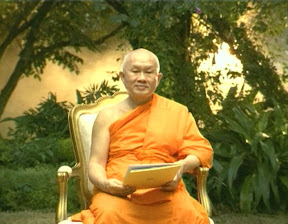
Venerable Phra Dhammapiṭaka
(P. A. Payutto)


(Original Language Version)

The term Buddhasāsana or Buddhism is generally used to convey a wide variety of meanings ranging from the Dhamma, the Saṅgha, their organizations and activities, to all religious sites and objects. However, if we examine the term to penetrate to its core, the meaning of Buddhasāsana is straightforward —its literal reading, “the Teachings of the Buddha,” which is the essence of Buddhasāsana; everything else is an extension or out growth of His teachings.

Once we have grasped the true meaning of the term, we will realize that the continuation of Buddhasāsana means the existence of the Buddha's Teachings. Were they to become vague or disappear, no matter how numerous are devotees and activities or how imposing religious institutions and objects are, it could not be said that Buddhasāsana exists. On the contrary, should those extraneous tangibles disintegrate while the Teachings of the Buddha remain, people can still have an opportunity to know Buddhasāsana. Consequently, Buddhasāsana can truly be upheld through the preservation of the Buddha's Teachings.


Dhamma and Vinaya : Embodiment and Abode of the Buddha

Buddhasāsana or the Teachings of the Buddha refer to the words of the Buddha, or His speech. Therefore, the preservation of Buddhasāsana is essentially the preservation of the words that the Buddha uttered in His sermons and the Discipline He laid down.

All Buddhists are well aware that the Dhamma and the Vinaya represent the Buddha, for the Buddha Himself said:

Ānanda, the Dhamma (Teachings) which I have expounded and the Vinaya (Discipline) which I have established for you all, the Dhamma and the Vinaya will be your Teacher after I am gone...

(M 7D.216)

Buddha's words are, therefore, both the embodiment and abode of the Teacher as they uphold and proclaim the Dhamma and the Vinaya for Him.

Thus, it is most vital to preserve the Buddha's words, the key to the continuation of Buddhasāsana. Attempts to preserve them have been made since the Buddha's lifetime, while the Teacher was still alive.


Saṅgīti : Preservation of the Buddha’s Words

The procedure is to collect all the words that the Buddha had uttered in the course of His teaching and divide them into sections for easy recollection. Those who took part would go over them thoroughly with questions and answers for the purpose of clarification until they reached full agreement. Participants would then chant the words together to vouchsafe their acknowledgement and establish the words thus gathered as the standard of reference to be committed to memory and handed down to future generations. This method is called Saṅgīti, which literally means “chanting together”.

This manner of Saṅgīti, or chanting together, was set as a precedent in the Buddha's lifetime by Venerable Sariputta, the chief disciple of the Buddha. Before the Buddha and the gathering of monks, Venerable Sāriputta collected the words of the Teacher together and arranged them on the basis of the number of items in their composition into groups of one to groups of ten as they now appear in the Saṅgītisutta. When the disciple finished his recitation, the Buddha gave an exclamation of approval.


The First Great Council of the Buddhist Era, B.E. 1

Later, almost immediately after the Buddha passed into Parinibbāna, the greatest and most important Saṅgīti took place. Seven days after the death of the Teacher, the Venerable Mahākassapa asked the monks to assemble for a Saṅgīti. When they all agreed, preparations were made and the First Saṅgīti was held at Rājagaha only three months after the Passing Away of the Teacher.

The gathering of the Buddha's words at this great assembly was done in this manner. The five hundred Arahants who had come in time to attend the last sermon of the Buddha met together and chose those who could recall accurately the Buddha's words in each area. The Venerable Upāli was chosen for the Disciplineṇ the Venerable Ānanda, for the Teachings. Then those who were well versed in the area would recite the words of the Teacher to the assembly. The Venerable Mahākassapa, who presided over the meeting, laid down the rules for presentation by grouping and sequencing questions to be askedṇ that is, it was done systematically.

Had the recitation of the Buddha's words, together with their context, taken place in the Buddha's lifetime, He would have endorsed them Himself. However, since the First Saṅgīti took place after the Teacher had passed away, the burden fell on the Arahants who had arrived in time to see the Teacher and listen to His final sermon to ensure their accuracy by means of catechism. When consensus was reached, the assembly chanted the words together and committed them to memory to be passed on. Thus the tradition was established.

The First Saṅgīti is the most important as the Teacher's words that were compiled and memorized then were to be the standard. What remains to be done is to keep the collection of the Buddha's words, the results of the First Saṅgīti, intact in its entirety. Consequently, since then emphasis has been put on recitation as a means of preserving the Buddha's words and the monks who were entrusted with their preservation were allotted sections to memorize.

This implies that the First Saṅgīti is the only one true to the meaning of Saṅgīti -- the sense of compiling and chanting together the words of the Buddha. Subsequent Saṅgītis were only meetings where monks who had committed the Buddha's words to memory convened to cross-examine one another to ensure that the collection of the Teacher's words from the First Saṅgīti was still intact and free from any interpolation.


Chaṭṭhasaṅgīti : The Great International Council, B.E. 2500

When Buddhasāsana reached the twenty-fifth century of the Buddhist Era, Theravāda Buddhist countries all prepared grand celebrations. The First International Saṅgīti was convened in Myanmar from B.E. 2496 to 2500 (C.E. 1952 -1956). Buddhist monks and scholars from every country that embraces the Theravāda tradition of Buddhasāsana and countries where Buddhasāsana is taught assembled in Myanmar to go over the text of the Pāḷi Tipiṭaka prepared by the Burmese together with versions in different scripts from other countries. This convocation is referred to as Chaṭṭhasaṅgīti, the Sixth Saṅgīti, and recognized by all Buddhist countries.

However, soon after the Chaṭṭhasaṅgīti was over, there occurred turmoil and political changes in Myanmar. This may have been the reason why the preservation and printing of the Pāḷi Tipiṭaka of the Chaṭṭhasaṅgīti had not proceeded smoothly, causing confusion between the Burmese version that had been used as a draft and the resolution version that was the outcome of the Saṅgīti.


Mahāsaṅgīti Tipiṭaka : International Pāḷi Tipiṭaka, B.E. 2545

Now, the M.L. Maniratana Bunnag Dhamma Society Fund under the patronage of His Holiness Somdet Phra Ñāṇasaṃvara the Supreme Patriarch of Thailand is about to publish in Roman script the Chaṭṭhasaṅgīti Pāḷi Tipiṭaka, the version that has been revised and edited by international monks of the Theravāda Buddhist tradition. The Pāḷi Tipiṭaka is thus made accessible to the international community.

With patience, determination and carefully laid-out procedures, the working committee has discovered the Chaṭṭhasaṅgīti Pāḷi Tipiṭaka that was printed at different times and has distinguished between the first edition and an edited version that was printed. Moreover, portions of later printed versions have been noted for what they truly are. The committee has worked hard to get the version that is most accurate. This has then been rechecked against the Pāḷi Tipiṭaka written in various scripts from several countries. It seems that the goal of the Chaṭṭhasaṅgīti has finally been realized.


Tipiṭaka as Dāna : a Gift of Dhamma from Thailand

It is hoped that the Romanised Pāḷi Tipiṭaka Edition, the Buddhist Era 2500 Great International Council Pāḷi Tipiṭaka, published by the M.L. Maniratana Bunnag Dhamma Society Fund under the patronage of His Holiness Somdet Phra Ñāṇasaṃvara the Supreme Patriarch, in honour of Their Majesties the King and Queen of Thailand, to be presented as a Gift of Dhamma worldwide, will serve as a bearer of the Buddha's teachings that travels great distances. This messenger has the mission to deliver the Teacher's words, which are beautiful at the beginning, beautiful in the middle and beautiful at the end, as uttered by the Buddha when He directed the first group of disciples to proclaim His message for the benefit of all mankind.


Venerable Phra Dhammapiṭaka
(P. A. Payutto)


October 9, B.E. 2545 (C.E. 2002)

Saturday, March 10, 2001

Tipiṭaka Lecture 2001


Tipiṭaka Lecture 2001

The Tipiṭaka & Vipassanā Meditation

On the Birth Centenary of Her Royal Highness
Somdech Phra Srinagarindra Boromarajajonani, The Princess Mother
of Thailand

Graciously presided over by Her Royal Highness
Princess Galyani Vadhana Krom Luang Naradhiwas Rajanagarindra
The Princess Mother's Elder Daughter

The International Tipiṭaka Hall, Chulalongkorn University
28 June B.E. 2544 (2001)


Tipiṭaka Documentary 2001
First streaming online : July 9, 2007


King of Siama Tipitaka at Tipitaka Lecture 2001 by Chulalongkorn Univ & Dhamma SocietyPrincess Mother of Thailand Portrait at Tipitaka Lecture 2001 by Chulalongkorn Univ & Dhamma SocietyPrincess Galyani visiting International Tipitaka Hall organised by Chulalongkorn Univ & Dhamma Society Princess Galyani viewing the International Tipitaka Collection led by Univ President & Dhamma Society ChancellorProf Visudh introducing Tipitaka Lecture 2001 by Chulalongkorn Univ & Dhamma SocietyProf Visudh introducing Tipitaka Lecture 2001 by Chulalongkorn Univ & Dhamma Society Tipitaka Lecture 2001 by Chulalongkorn Univ & Dhamma Society at International Tipitaka HallSN Goenga at Tipitaka Lecture 2001 by Chulalongkorn Univ & Dhamma Society SN Goenga at Tipitaka Lecture 2001 by Chulalongkorn Univ & Dhamma Society Tipitaka Lecture 2001 Publication by Dhamma Society  SN Goenga at Tipitaka Lecture 2001 by Chulalongkorn Univ & Dhamma Society Closing Remarks by Amb. Sioris at Tipitaka Lecture 2001 by Chulalongkorn Univ & Dhamma Society Closing Remarks by Amb. Sioris at Tipitaka Lecture 2001 by Chulalongkorn Univ & Dhamma Society Tipitaka Lecture Receptiong for Royal Descends of King Rama V by Chulalongkorn Univ & Dhamma SocietyPrincess Mother of Thailand Portrait at Tipitaka Lecture 2001 by Chulalongkorn Univ & Dhamma Society


Closing Remarks

By
George A. Sioris
The Former Greek Ambassador to India, Thailand and Japan
and
Founding Member of the M.L. Maniratana Dhamma Society Fund
Under the Patronage ofHis Holiness Somdech Phra Ñāṇasaṃvara
The Supreme Patriarch of Thailand


Your Royal Highness,
Excellencies,
Mr. President and Mr. Chancellor
Distinguished guests,


It is certainly difficult to break the spell of the magnificent talk that we were deeply privileged to listen to. But, even as an "anti-climax", a few general concluding thoughts may be in order at this point and I fell sincerely honoured to be called upon to act as an interpreter of such a distinguished audience.

I am confident that firstly, a deep feeling of inner tranquillity permeates us all after the wise and inspiring words by Buddhist meditation Master like Mr. Goenka. We are truly grateful to him for his precious insights and the wisdom he brought us from Lord Buddha's birthplace.

There is an additional feeling of spiritual contentment as we gather here on the occasion of the elaborate Dhamma Society Publication of Dr. Anatole Peltier's original work on the Five Precepts. We all marvel at such a treasure of the popular Buddhist literature of Thailand. I believe that the task in front of some of us, entrusted with the honor to translate this story in foreign languages in view of its dissemination beyond the Buddhist sphere and throughout the world, is precisely to convey its deep meaning and wisdom, modestly hidden under a simple style; a style reflecting the unique atmosphere of recitation during quiet vigils, in various temples of the land, for the benefit of rural lay believers.

It is indeed a multiple happy coincidence that we are all gathered in such a prestigious building and this International Hall of such a leading Thai University, at a function so graciously presided by Her Royal Highness Princess Galyani Vadhana, in commemoration of the 100th anniversary of our most beloved "Princes mother of Thailand". May her serene smile, conspicuous even to the remotest village of Thailand, guide the steps of each one of us individually towards "Santi".

May the noble task of Chulalongkorn University and the M.L. Maniratana Bunnag Dhamma Society Fund come to fruition for the benefit of humankind, in times where inner peace and serenity become such a tragic rarity...


Akkodhena jine kodhaṃ...
Hatred is never conquered by Hatred;

(English Translation from Mahāsaṅgīti Tipiṭaka Buddhavasse 2500

Suttantapiṭaka khuddakanikāya Dhammapada Kodhavagga Vol.18 no.223)

Hatred is conquered only by Loving-Kindness. This is a Law eternal.

SĀDHU !

Wednesday, September 20, 2000

The International Tipitaka Hall

A Welcome Address


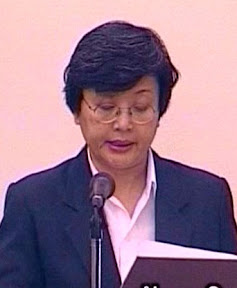
Assistant Prof. Dr. M.R. Kalaya Tingsabadh
Dean of the Faculty of Arts, Chulalongkorn University

Delivered at
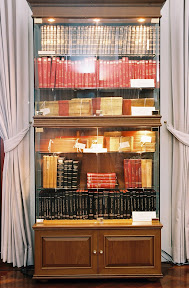
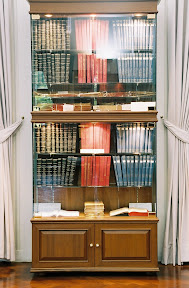
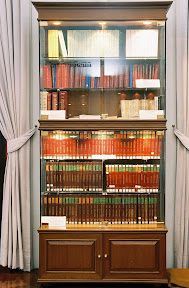
The Installation Ceremony of the International Tipiṭaka Collection
Presented as a donation to the Faculty of Arts
by
The M.L. Maniratana Bunnag Dhamma Society Fund
Under the Patronage of His Holiness the Supreme Patriarch of Thailand

At the newly established International Tipiṭaka Hall
The Arts Building One, the Faculty of Arts, Chulalongkorn University
September 20, B.E. 2543 (A.D.2000)


Distinguished guests,

It is a great honour for the Faculty of Arts, Chulalongkorn University to welcome His Holiness the Supreme Patriarch for His first official visit to the university today (September 20, 2000). This marks the occasion His Holiness graciously presides over the installation of the International Tipiṭaka Collection of the Buddhist Theravada Scriptures presented by the M.L. Maniratana Bunnag Dhamma Society Fund under the Patronage of the His Holiness the Supreme Patriarch of Thailand as a Gift of Dhamma to the Faculty of Arts, Chulalongkorn University. The Faculty of Arts would also like to express an appreciation to you all for attending religious ceremony held this morning in the Arts Building One. May I take this opportunity to report on the background of these Buddhist sacred texts.

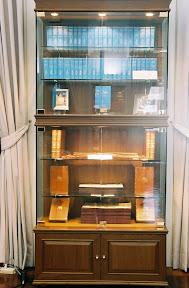
To commemorate the 72nd Anniversary Celebration of His Majesty King Bhumibol Adulyadej, the M.L. Maniratana Bunnag Dhamma Society Fund under the Patronage of His Holiness is carrying out a publication project of a Romanized script of the Pāḷi-language Tipiṭaka, based on the Chaṭṭhasaṅgῑti Edition B.E. 2500 (1957). A total number of 1,000 sets of the complete Pãḷi Canon, 40 volumes, will be presented to major academic institutions worldwide.

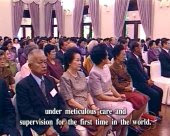
The Chaṭṭhasaṅgῑti Edition is the outcome of the Sixth Great International Buddhist Council held in Burma between B.E.2498-99 (1954-56) and is being published in Roman alphabet under meticulous care and supervision for the first time in the world. In preparing the Roman-scripted text for publication, the Dhamma Society Fund has made comparison with other available texts and acquired many different Pali Canon publications in various national scripts and translations in various languages.

Furthermore, during the preparation of the publication project, the Dhamma Society Fund has been voluntarily assisted by faculty members and students of Chulalongkorn University: the Faculty of Engineering in preparing the electronic manuscript; the Faculty of Fine and Applied Arts in designing computer fonts and the book format; the Faculty of Science in printing technology and photography; the Faculty of Architecture in creating art work; and the Faculty of Arts in editing the autograph copy and other documentary texts.

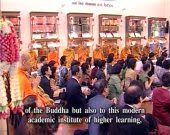
During the publication process, the Dhamma Society Fund has been proud to observe that Chulalongkorn University's facuty and students have held these sacred texts in high esteem. For this reason, the Dhamma Society Fund wishes to have this International Tipiṭaka Collection permanently enshrined at Chulalongkorn University for the benefit of the entire university community. The Faculty of Arts offers instruction and conducts research in a number of disciplines that can directly and indirectly benefit from the International Tipiṭaka Collection, namely the Section of Pali-Sanskrit, Buddhist Studies, Philosophy, Thai language, Translation and Interpretation, Linguistics, History and Library Science. It is thus fitting for the Dhamma Society Fund to present this international corpus of Buddhist Holy Scriptures to the Faculty of Arts, Chulalongkorn University.

This is also a fitting gesture of gratitude to the beloved Alma Mater of the late Thanpuying M.L. Maniratana Bunnag, the Founder and First President of the Dhamma Society Fund, who was unanimously elected the student representative of the Faculty of Arts graduates of the class of 1947. That the Faculty of Arts, Chulalongkorn University is presented with one of the most complete international corpus of Theravada Buddhist Holy Scriptures in the country is a cause to be greeted with utmost rejoicing. The Tipiṭaka represents the Supreme Buddha Himself so it is deemed the most auspicious symbol not only for the Faculty of Arts but also for Chulalongkorn University as a whole.


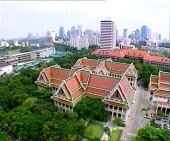
It is also appropriate to establish the International Tipiṭaka Hall in the Arts Building One because it was the first university building to have been erected, the foundation stone of which was graciously laid by King Vajiravudh Rama VI, the Royal Founder of this institution. It will thus serve as the place to house the most highly esteemed symbol both in Buddhasasana and a research centre for the invaluable knowledge for all humankind.

To officially celebrate the installation of the International Tipiṭaka Collection, on the date September 20th 2000 today, must be regarded as a specially auspicious occasion, since this very day marks the anniversary of the birth of two beloved sovereign monarchs of Thailand -- King Chulalongkorn, Rama V and King Ananda Mahidol, Rama VIII of the Royal House of Chakri.

I would like to express our deepest appreciation to the M.L. Maniratana Bunnag Dhamma Society Fund under the Patronage of His Holiness the Supreme Patriarch of Thailand for this unique sacred gift, which is held in highest spiritual reverence by all Buddhists and which is of inestimable value for the academic world. The Faculty of Arts, Chulalongkorn University will act according to the wishes of the donor. We shall cherish this treasure and see to it that it serve international scholars and the general public both at Chulalongkorn University and elsewhere.

Thank you.

Wednesday, October 20, 1999

World Tipitaka Patron

BENEDICTION
From the Preface of the Pāḷi Tipiṭaka Publication
in Roman script, 2548 (2005)

His Holiness
Somdet Phra Ñāṇasaṃvara the Supreme Patriarch of Thailand

Patron of
The World Tipiṭaka Project
and
The M.L. Maniratana Bunnag Dhamma Society Fund

Original Language Version


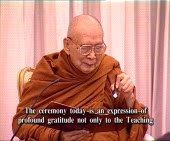
Major Suradhaj Bunnag, Chancellor of the M.L. Maniratana Bunnag Dhamma Society Fund under the Patronage of His Holiness the Supreme Patriarch of Thailand, has informed me that he will publish the complete Pāḷi-language Tipiṭaka of the Great International Council Buddhist Era 2500 (1956) in Roman script, for the first time in Thailand. This Pāḷi Tipiṭaka has been meticulously edited by 2,500 Buddhist monks of the highest scholastic repute in the Theravāda tradition from around the world. The international edition of Pāḷi Tipiṭaka in Roman script, comprising 1,000 complete sets each containing 40 volumes, will be presented as gifts of Dhamma to major international institutions all over the world.


I thereby designate this commemorative Pāḷi Tipiṭaka edition
in Pāḷi :

Mahāsaṅgīti Tipiṭaka Buddhavasse 2500


and in English :

The Buddhist Era 2500 Great International Council Pāḷi Tipiṭaka


The Pāḷi Tipiṭaka is the Holy Teachings of the Buddha, the Teacher of man and devine beings. The Pāḷi Tipiṭaka falls into three divisions, namely, Vinayapiṭaka, the Book on the Disciplines; Suttantapiṭaka, the Book on the Discourses; and Abhidhammapiṭaka, the Book on the Ultimate Realities. It comprises 84,000 Dhammakhandhas, or Dhamma sections. As He approached Parinibbāna, the Buddha uttered:


Ānanda, maya dhammo ca vinayo ca desito paññatto, so vo mamaccayena satthā...

(M 2500/2548 7D.216)


Ananda, the Dhamma (Doctrine) which I have expounded and the Vinaya (Discipline) which I have established for you all, the Dhamma and the Vinaya will be your Teacher after I am gone...

Consequently, five hundred Arahanta Elders, who were all led by Venerable Mahākassapa Arahanta held the First Great Council for compilation of the Buddha’s words in the Tipiṭaka at the city of Rājagaha in ancient India. The gathering of the arahantas at the First Great Council is called in Pāḷi as Paṭhamamahāsaṅgīti. Thereafter there were Great Councils with a view to perpetuate the Teachings of the Buddha. Buddhists all over the world regard the Pāḷi Tipiṭaka as the Buddha Himself. Hence, the compilation of the Buddha’s words and the propagation of the Pāḷi Tipiṭaka are profound meritorious acts.

Thailand’s friendly Buddhist countries including Sri Lanka, Myanmar, Cambodia, and Laos which profess Theravāda Buddhasāsana held, during Buddhist Era 2497-2499 (1953-1955), in Yangon, the Great Council of the Buddha’s Teaching. The Buddhist monks who were well-versed in the Pāḷi Tipiṭaka were invited from all over the world to edit and verify the Pāḷi Tipiṭaka.

With the approval of the Ecclesiastical Council under the auspices of the Royal Thai Government, a group of Buddhist monks from Thailand including myself took part in this Great Council. Their Majesties the King and Queen of Thailand made a State Visit to Yangon, Myanmar, in Buddhist Era 2503 (1960), and offered their royal support to the Great International Council along with the Heads of State of other countries. In Their Majesties’ official suite, was included Thanphuying M.L. Maniratana Bunnag, Her Majesty the Queen’s Lady-in-Waiting.

With the completion of the trasliteration into Roman script of the Buddhist Era 2500 Great International Council Pāḷi Tipiṭaka Edition, Thanphuying M.L. Maniratana Bunnag expressed her deepest appreciation and acted as leader in organizing the World Tipiṭaka Edition to be published and propagated all over the world...

I would, therefore, like to offer commendation for this profound meritorious act. May happiness and peace pervade the whole universe through the omnipotent power of the Buddha, the Dhamma and the Saṅgha, through the omnipotent power of the Pāḷi Tipiṭaka with 84,000 Dhammakhandhas, through the omnipotent power of Phra Syāmadevādhirāja, the Guardian Deity of Siam, and through the omnipotent power of the highest god brahma and deities of the whole universe. May Their Majesties, King Bhumibol Adulyadej the Great Dhamma Protector and Queen Sirikit of Thailand, who are both endowed with benevolent and excellent qualities and ever-firmly devoted to Buddhasāsana, and all the members of royal lineage, be blessed with longevity, happiness and peace.

May the highest brahma gods and deities, as well as human and all beings, joyously celebrate and bless those who have piously donated money and kind toward this profound meritorious act of preparation the complete Romanised Pāḷi Tipiṭaka published in the Kingdom of Thailand, the first of its kind in the world, for their happiness and prosperity, now and always.


His Holiness Somdet Phra Ñāṇasaṃvara

The Supreme Patriarch of Thailand


20 October Buddhst Era 2542 (1999),
amended, 25 January Buddhist Era 2545 (2002)

Bovornives Vihāra, Bangkok.