Tuesday, March 6, 2007

Royal patron of the 'Tipitaka'


ROYAL PATRON OF THE 'TIPITAKA'

Bangkokpost
Saturday June 23, 2007


Today, Buddhist ceremonies at Government House mark the 84th birthday of HRH Princess Galyani Vadhana. Among her most recent meritorious activities is her support for the Roman-scripted version of the 'Tipitaka', the Buddhist scriptures


M.R. BENCHAPA KRAIRIKSH


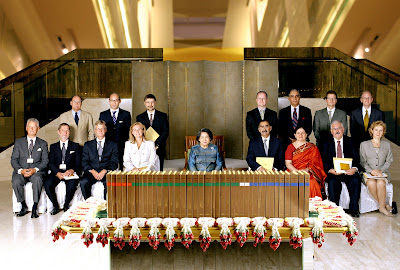
Her Royal Highness Princess Galayni Vadhana with the 40-volume 'World Tiptaka Edition', together with foreign ambassadors and representatives of 25 countries, which received the Siamese-script 'King of Siam Tipitaka' from the princess's grandfather, King Chulalongkorn Chulachomklao of Siam, over a century ago.

(Translation)

It is never too late to learn more about the recent meritorious activities of His Majesty the King's only sister, Her Royal Highness Princess Galyani Vadhana Korm Luang Naradhiwas Rajanagarindra, who celebrates her 84th birthday this year. Born on May 6th in London, the princess spent her childhood in Lausanne, Switzerland, and received bachelor's degree in chemistry and education, with a major in social sciences. Quite an accomplishment for a Thai princess in those days. With the soul of a young “guru”, from Europe, she started her career as a university lecturer in Thailand, not in chemistry though, but in French and literature, in which she excelled as one of the pioneering scholars in foreign-language teaching.

Although no longer teaching, but as a staunch admirer of classical music, she continues to support art and music education in various universities nationwide.

As a member of the royal family, the princess also devotes her time to further the work of her parents, Prince and Princess Mahidol of Songkhla, particularly in preventive national health care.

Many of Princess Galyani Vadhana's medical welfare programmes have grown into well-established foundations under her patronage, such as the Princess Mother Volunteer Doctors, the Prosthesis Foundation and the Kidney Foundation of Thailand.

As the most senior member of the royal family, Princess Galyani Vadhana is the royal matriarch to all of the 130 branches of the royal lineages. One of the lesser known works, and her long-time passion, is the restoration of the forgotten royal cemetery and monastery at Wat Ratch-bophit, founded by King Chulalongkorn, the princess's grandfather.
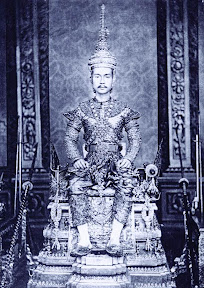


King Chulalongkorn Chulachomklao the Great of Siam who initiated the printing of the most complete set of Pali Tipitaka and donated to the world in 1893.


King Chulalongkorn was hugely popular in Europe as the first sovereign Asian monarch to visit European capitals, over a century ago. Some of his adventurous and historic routes --a journey to the North Pole and a pilgrimage to the Holy Tooth Relic Temple in Sri lanka-- have also been traversed by the princes.

But recently, still following her grandfather's footsteps, she discovered a new and more challenging route – the King of Siam Tipitaka historic networks in 30 countries around the world.

Written on palm leaves in the sacred, old Indian language of Pali, Tipitaka has been the conventional depository of Buddha's teachings of more than 2,000 years.

In 1893, King Chulalongkorn revolutionized this traditional Buddhist convention – he published the Tipitaka in book-form for the first time. In stead of inscribing the sacred Pali texts by hand in old Khmer script, King Chulalongkorn ordered the new edition, totalling 39 volumes, to be printed in modern Siamese script by a Western printer. With the efficiency of printing teachnology and book-binding, the Siamese-script edition was sent as royal gifts to 260 institutes across five continents.

This came to light in 2003 at a commemorative public lecture on the “King of Siam's Tipitaka Technology” at the Ministry of Information and Communication Technology, presided over by Pricess Galyani Vadhana.
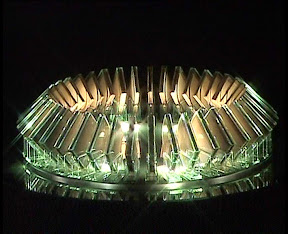
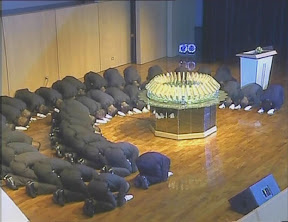
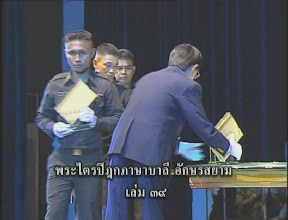
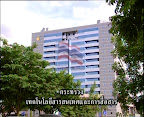
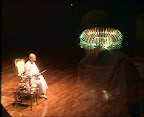
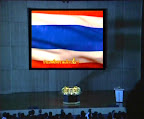
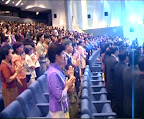
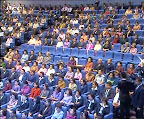
A Speical Commemorative Lecture “King of Siam's Tipitaka Technology” at the Ministry of Information and Communication Technology, Thaialand, in 2004.


Today, only one complete set of the King of Siam Tipitaka has survived in Thailand. But a great number of these priceless collections are believed to be in existence in libraries and universities through out the world, including Uppsala University in Swenden, the Smithsonian Institute in the US. The Russian Academy in St Petersburg, the National Diet Library in Japan, the University of Sydney, Australia, and the Chinese University of Hong Kong.


The cover of the historic 39-volume 'King of Siam Tipitaka Edition', (1893), the world's first printed set of Pali Tipitaka.


King Chulalongkorn's far-sightedness to print an innovative phonetic table, such as the transliteration chart comparing the Siam-script with Roman-script alphabets, made it possible for international scholars worldwide to study the Pali text, over 100 years ago.
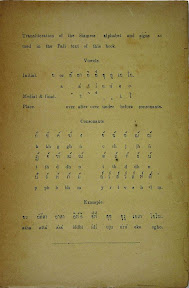
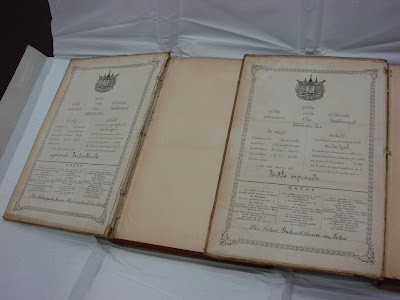


Example of the 'transliteration chart', another world's first innovation in the Siam-script Tipitaka.


The 'King of Siam Tipitaka' discovered recently in a rare book collection of Japan's national parliamentary library. Seven sets have been located by Dhamma Society Japan in 2006-2007. There are no less than 23 more sets waiting to be discovered. Digital Archives from Dhamma Society's World Tipitaka Project.

This landmark contribution by the King of Siam Tipitaka provided a solid foundation in 1957 for the Great International Council, the first ever Tipitaka convocation by 2,500 Theravada Buddhist monks in Rangoon, Burma, to celebrate 25 centuries of the Buddhist era.
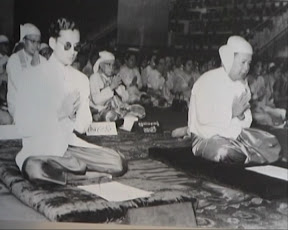


His Majesty the King of Thailand with the His Excellency the President of the Union of Burma at the holy site of the Buddhist Era 2500 Great International Buddhist Council in Rangoon during a state visit in 1960.


Like other heads of states,Their Majesties the King and Queen of Thailand visited the site of the Great International Council during a state visit to the Burmese capital in 1960.

In 2005, the International Council Pali Tipitaka was published for the first time by the Dhamma Society, in Roman alphabet, thereby following the tradition of Tipitaka printing initiated by the King of Siam over a century ago.

When Princess Galyani Vadhana learned about the new version, she immediately extended her support for a donation project worldwide.

Following closely in the footsteps of King Chulalongkorn, the princess accepted the position of honorary president of Tipitaka presentation to international institutes, where the King of Siam Tipitaka has been preserved.

On March 6th, 2005, the princess led a historic one-day pilgrimage to Colombo, Sri Lanka, to present the World Tipitaka Edition as a Dhamma gift to the then Sri Lankan president, Chandrika Bandaranaike Kumaratunga. Current Sri Lankan President Mahinda Rajapakse has since declared March 6th as “ World Tipitaka Day”.
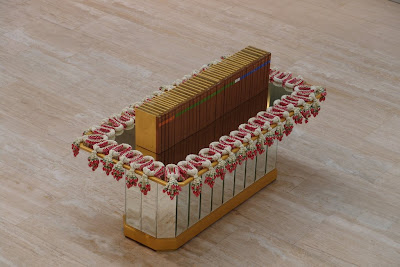


The inaugural 40-volume 'World Tipitaka Edition' in Roman script
published by the Dhamma Society in 2005.


Since then many international institutions have made requests to receive the World Tipitaka Edition from the princess.

This year requests came from the Maha Bhodhi Society of India, the Japan Theravada Society and Lund University of Swedan.

Presentation of the World Tipitaka Edition took place at the Ministry of Foreign Affairs on March 6th, the anniversary of the princess's inaugural presentation to the world.

Thanks to the “Princess Patron of Tipitaka”, the cultural heritage of King Chulalongkorn –the King of Siam Tipitaka– has been rediscovered. Most importantly, the wisdom of humanity in the ancient scripture has now been securely protected and preserved for prosperity.
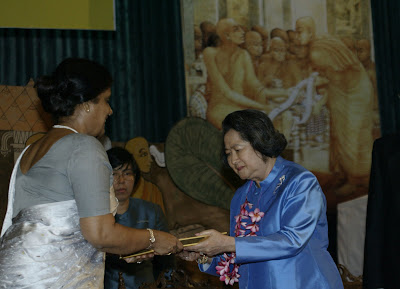


Her Rotal Highness Princess Galayni Vadhana presents the inaugural 'World Tipitaka Edition', in Roman script, to Sri Lankan President Chandrika Bandaranaike Kumaratunga, at the Bandaranaike Memorial International Conference Hall in Colombo, on March 6, 2005.


There are two Tipitaka projects in Thailand overseen by the princess: Pali chanting at a rural temple in Nakhon Sawan; and restoration of Ayudhaya period Tipitaka Hall at Apsorn Suwan Monastery in Bangkok.


This article has been updated
with more details and images from the World Tipitaka Project


Monday, November 27, 2006

Tipitaka Studies in the West


Statement by Dr. Olle Qvarnström
Professor of History of Religions and Chair of Indic Religions
Lund University, Sweden.


Special visiting guest at Tipiṭaka Technology Exhibition
at Museum of Image Technology
Under the Patronage of
H.R.H. Princess Galyani Vadhana Krom Luang Naradhiwas Rajanagarindra

Organised by
Faculty of Science, Chulalongkorn University
and
Dhamma Society Fund

At the Museum of Image Technology
Under the Patronage of H.R.H. Princess Galyani Vadhana
Department of Imaging and Printing Technology, Faculty of Science,
Chulalongkorn University, Bangkok, Thailand

Monday 27 November 2006

Commencement day at Lund University, Sweden Lund University Vice-chancellor and leading members at Lund community
Classes at Lund University Medieval Church in Lund, Sweden


Today, as with most universities, the 35,000 students that are enrolled at Lund are affiliated with various faculties – including the faculty of Humanities and Theology; the centre for Theology and Religious Studies forms a part of that faculty and hosts the Department of History of Religions, which contains a special section on Indic religions.


Lund University, Sweden during King of Siam fact finding mission, 2003.  Lund University, Sweden during King of Siam fact finding mission, 2003.

Lund University Library


Religious Studies at Lund University

Although Sweden's formal study of Indic religions and languages is said to have originated in the 19th century, our library collections indicate that Buddhism was known to us as early as the 17th century, despite the fact that Sweden was neither a colonial power no involved in missionary activities in Asia.

Thus from the 17th to the mid 20th century, Swedish society was exposed to Buddhist ideology, first through the reports of Jesuit missionaries, travelers, etc., and later through the study of scholarly texts.

After the end of World War II, the Swedish population became exposed to traditional Buddhist practice through migrants that had arrived from traditionally Buddhist countries.


Theravada scripture in Lanna script in Northern Thailand  Buddhist Theravada Tradition in Sri Lanka Pali Tipitaka in palm leaves in Thailand

Pāḷi Tipiṭaka Scripture in Theravāda Tradition


Studies in Buddhism

At around the same time, various forms of Buddhist meditation came to be practiced by indigenous Swedes – and by Europeans and North American as well.

Consequently, the study of Buddhism is not only indispensable in terms of obtaining a proper understanding of Asia's past and present; it is of significant relevance to our understanding of contemporary Western civilizations as well.

Long aware of Buddhism's impact on world cultural development, Lund University has been committed to the study of South and Southeast Asian thought form many years. Quite recently, however, our Center for Theology and Religious Studies has established a Chair devoted exclusively to the study of Indic religious, including Buddhism – the only one of its kind in Scandinavia. It is my great privilege to hold this Chair.

For the last several decades, Buddhist studies at Lund University have been largely focused on Mahayana forms such as Zen Buddhism, which has had a profound influence not only on popular Western culture, but on important Western disciplines such as psychology and psychotherapy as well; Tibetan Buddhism is another Mahayana form that has attracted great interest, partly due to the missionary activity and migration that occurred in the aftermath of the political situation in Tibet.

To counterbalance this trend, our Indic Religions Chair is committed to reintroducing the study of Theravāda Buddhism and Pāḷi (the language of the Tipiṭaka), building upon the heritage of such great scholars as Helmer Smith.

Smith had been an eminent master of the Pāḷi language whose many scholarly accomplishments included the editing of the “Saddanīti” – the most comprehensive of all Pāḷi grammars, authored in the 12th century by the Burmese scholar Aggavaṃsa.


first page with a dedication sheet to the recipient institution
King of Siam Tipitaka at Lund University, Sweden 2003 Dhamma Society inspecting King of Siam Tipitaka at Lund University

39-Volume of King Chulalongkorn Chulachomklao of Siam Pāḷi Tipiṭaka, 1893
in a rare book collection of Lund University Library


Lund University and Tipiṭaka Studies

Today I am happy to announce that our attempt to reintroduce Pāḷi and Tipiṭaka studies at Lund University may soon obtain a considerable boost.

In February 2004, we were honoured to receive a visit from Chancellor of the Dhamma Society Fund under the Patronage of the Supreme Patriarch of Thailand, together with a Pāḷi scholar from Peradeniya University, Sri Lanka.

The purpose of their visit had been twofold; first of all, they had been curious to learn whether or not the King of Siam Pāḷi Tipiṭaka, printed in 1893 by King Chulalongkorn Chulachomklao, remained in good condition and still located in our main university library; and secondly, they had come to announce the publication of a new, roman-script edition of the Theravāda Buddhist canon, “The Buddhist Era 2500 Great International Council Pāḷi Tipiṭaka” – a forty volume edition published by the Dhamma Society under the His Holiness Somdet Phra Ñāṇasaṃvara the Supreme Patronage of the Supreme Patriarch of Thailand.

Thus, in the midst of Sweden's dark and desolate winter, both scholars and students were warmed to hear about the valuable treasure that had been preserved right in our university library for over a century donated probably two years of printing in 1893 from Bangkok through the Royal Thai Embassy in London by King Chulalongkorn of Siam himself.

In 1897, in connection with his first European tour, King Chulalongkorn of Siam visited Sweden's King Oscar II in order to strengthen the ties between the two kingdoms; to memorialize that visit, a permanent Thai pavilion has recently been established in Utanede, Jamtland.

Moreover, in the century that has transpired since King Chulalongkorn of Siam made his generous donation, Buddhism has attained a rightful place in Swedish society.


World Tipitaka Edition in Roman script published by Dhamma Society 2005  World Tipitaka Edition in Roman script published by Dhamma Society 2005

The World Tipiṭaka Edition in Roman script, 2005
published in Bagnkok


Archive of 1956-57 World Tipitaka Council in yangon  Archive of 1956-57 World Tipitaka Council in yangon  Archive of 1956-57 World Tipitaka Council in yangon  Archive of 1956-57 World Tipitaka Council in yangon  Archive of 1956-57 World Tipitaka Council in yangon  Archive of 1956-57 World Tipitaka Council in yangon

The Great International Buddhist & Tipitaka Council B.E. 2500 (1957)
in Yangon

The World Tipiṭaka Project

“The Buddhist Era 2500 Great International Council Pāḷi Tipiṭaka” published by the M.L. Maniratana Bunnag Dhamma Society fund, is the effort of 2,500 erudite monks from all Theravāda countries in Asia – including Thailand, Sri Lanka, Myanmar, Laos and Cambodia – participating in the Chaṭṭhasaṅgāyanā in Rangoon and celebrating 2,500 years of Buddhist teaching by reaching a consensus as to the reading of the Tipiṭaka, their common religious scripture.

This 1957 Tipiṭaka edition has been proof–read and romanised by the Dhamma Society's editorial and technical staff, which was comprised of scholars, monks, nuns from Thailand and Sri Lanka.

To preserve the Pāḷi Tipiṭaka and facilitate research and teaching, the most advance forms of modern IT and printing technology were employed in cooperation with Electrical and Computer Engineering Departments as well as the Imaging and Printing Technology Department, Chulalongkorn University.

And as the Dhamma society has chosen to emphasis the oral value of the Pāḷi language, this edition includes additional diacritics that facilitate recitation and pronunciation of the Pāḷi sound a system of which was first introduced in the printing of King of Siam Pāḷi Tipiṭaka.


 20-Volume Tipitaka Studies Reference by Dhamma Society 2006  20-Volume Tipitaka Studies Reference by Dhamma Society 2006

The 20-Volume International Tipiṭaka Studies Reference, 2006
Pāḷi language in Roman Script


The publication of this forty volume Pāḷi Tipiṭaka in Roman Script – along with its newly published twenty-volume companion – the Pāḷi Tipiṭaka Studies Reference 2006 – containing variant readings, indexes, cross–reference, etc., – is thus a monumental scholarly achievement.

On behalf of Lund University, I would like to extend my thanks to the M.L. Maniratana Bunnag Dhamma Society Fund for this priceless contribution to world culture and religion.

I would also like of extend a personal note of thanks to Maj. Bunnag, who, in memory of his dear mother, labored selflessly to bring this project to fruition.


The forthcoming Tipiṭaka to Lund University

It is my understanding that Lund University will be granted the opportunity of requesting a copy of this “Buddhist Era 2500 Great International Council Pāḷi Tipiṭaka” directly from Her Royal Highness Princess Galyani Vadhana, Tipiṭaka Patron and Honorary President of the Tipiṭaka Presentation Worldwide.

For this great privilege we are both delighted and thankful, and I must say that should our request meet with success, we intend to do more than merely add this new edition to our university library, although it is our humble honor to do so; through seminars, workshops, lectures and publications, we intend to promote the study of the Pāḷi Tipiṭaka throughout the scholarly world.

At Lund, the work has already begun: under our supervision, a research fellow of Sri Lanka's Peradeniya University will be writing a PhD thesis based up this Great International Council Pāḷi Tipiṭaka. And more is yet to come.


Tipiṭaka and the World : Beyond Academic Studies

Having said this, it must also be said that awarding this new romanised edition of the Pāḷi Tipiṭaka to Lund University will represent more than the mere granting of a gift to a school; beyond that, it will represent the granting of an invaluable treasure by the people of Thailand to the people of Sweden.

As such it will strengthen the bond between our countries established long ago by King Chulalongkorn Chulachomklao – countries that have known one another in times of joy as well as sorrow.

In recent times, the Tsunami catastrophe brought our nations together in tragedy, and all Swedes including our King have repeatedly expressed their deep gratitude for the tremendous kindness shown to Swedish victims by the Thai population.

The granting of the Pāḷi Tipiṭaka to Lund University thus has many dimensions – historical, intellectual, cultural and religious – and will open up new opportunities for cooperation between our two kingdoms.


Royal Tipitaka Pilgrimage by HRH Princess Galyani from Thailand to Sri Lanka, 2005 Inaugural Tipitaka Edition Presented to the Constitutional Court of Thailand, 2005 Inaugural Tipitaka Edition to the Western World presented to Carolina Rediviva, Sweden, 2005

The Three Inagural Editions
Presented to the President of Sri Lanka, the Constitutional Court of Thailand
and the Uppsala University Library, Sweden


In 2005, the inaugural sets of the World Tipiṭaka Edition was presented by H.R.H. Princess Galyani Vadhana as a donation to the Presidential Mansion of Sri Lanka, the Constitutional Court of the Kingdom of Thailand and to the University of Uppsala in Sweden – the Carolina Rediva. In 2006, the new standard edition was donated to the Parliament of Sri Lanka.

It is my humble wish that the forthcoming edition be donated to Lund University, one of Europe's most important centers of the international learning.

Thank you.


Prof of Indic Religion, Lund University, Sweden.

Dr. Olle Qvarnström
Professor of History of Religions and Chair of Indic Religions
Lund University, Sweden.

Monday, March 6, 2006

Tipiṭaka in the Sri Lankan Parliament

Tipiṭaka Acceptance Speech


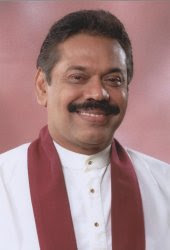
His Excellency Mahinda Rajapaksa
President of the Democratic Socialist Republic of Sri Lanka

On the occasion of
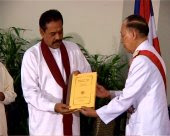
The Presentation of the Royal Donation
The Buddhist Era 2500 Great International Council Pāḷi Tipiṭaka
40 Volumes in Roman Script

for
The Parliament of Sri Lanka, Colombo
March 6, B.E. 2549 (2006)


(Translation)

Rear Admiral His Serene Highness Prince Pusarn Swasdiwat,
Delegation of Royal Tipiṭaka Pilgrimage from Thailand,
Honorable Speaker,
Members of the Parliament,
Distinguished Invitees, Ladies and Gentlemen,


On behalf of the People of Sri Lanka, let me first express my sincere appreciation and heart-felt gratitude to Her Royal Highness Princess Galyani Vadhana, elder sister of His Majesty the King of Thailand for the goodwill gesture extended to my people and country through the generous presentation of the very first inaugural edition of the Buddhist Era 2500 Great International Council Pāḷi Tipiṭaka Edition in English Script to the President of Sri Lanka a year ago and to the Parliament of Sri Lanka today, the first anniversary day.

This royal presentation comes as a blessing to my country at a time my country is seriously engaged in finding a sustainable and peaceful political settlement. This year, we celebrate the 2550th year of Buddha-jayanti. This royal presentation reminded me and my government the centrality of the study and practice of the Tipiṭaka, the supreme teachings of the Buddha, in all our undertakings and negotiations. For me, this royal gift also marks the celebration of the 2550th year of Dhamma-jayanti of the first compilation of the Tipiṭaka at the first Great Council held in ancient India just after the Buddha's passing away.

From its inception, the Tipiṭaka, the universal and sacred scriptures of the Buddasāsana, and Pāḷi, its sublime language, enlightened the Asian civilization. It is through the Tipiṭaka and the bearers of the Tipiṭaka that both South Asia and Southeast Asia learned to read and write, found peace and prosperity, and developed cultural and friendly ties among civilized countries of the world.

It is at the fourth Great Council held in Sri Lanka in the first century BC that the Tipiṭaka was first committed to writing. The written Pāḷi Tipiṭaka continued for several centuries under the patronage of the kingship of Sri Lanka and it is through the dedicated effort of our forefathers that Sri Lanka was able to present the greatest Dhamma gift, the Pāḷi Tipiṭaka in Sinhalese script, to the world. This greatest gift resulted in the preservation of the supreme Tipiṭaka in its completeness and purity in Sri Lanka, Thailand and Burma. Out of all Great Councils, the first international council that was held in Burma (Myanmar) from 1954 to 1956 was really the international council in the true sense of the word for it is at this council the erudite Buddhists from all Theravāda countries participated in producing the Universal Tipiṭaka, popularly known as the Chaṭṭhasaṅgīti Edition which was originally printed in Burmese script.

After 50 years, at this technologically advanced modern world of ours, we are participating in a globally significant event. Today both Sri Lanka and Thailand turned a new chapter in the religious history of Buddhism and also in the profound political history of the world. Her Royal Highness, the Princess Galyani Vadhana of the Kingdom of Thailand, through her royal envoy His Serene Highness Prince Pusarn Swasdiwat, presented the first Universal Pāḷi Tipiṭaka Edition in the international script of English alphabet to the Parliament of Sri Lanka. This symbolic act made Sri Lanka the first country in the world to incorporate the greatest wisdom of the Tipiṭaka to the modern-day political institution of Parliament.

The Pāḷi Tipiṭaka that is presented and enshrined at the august assembly of this Parliament is the internationally agreed Tipiṭaka Edition of the Buddhist Era 2500 (1956) and here it comes in 40 volumes, and also as the most perfect and complete version. The Dhamma Society Thailand has successfully endeavored not only to find and publish the actual resolution of the Great International Council of 1956 but also to proof-read thoroughly to remove all printing and editorial errors by employing the recitation, the Buddhist method of proof-reading, as well as the most advanced Information Dhamma Technology. A period of six years has been utilized to complete the proof-reading task and the preparation of the standard electronic database. This alone shows the magnanimity of the project.

Therefore, on behalf of the people of Sri Lanka and the Buddhists all over the world, I highly appreciate this generous gift on the part of the Royal Family of Thailand and extend my and my country's fullest support for the preservation and the presentation of this greatest wisdom of the supreme Buddha to the world at large. I also assure this audience that, in cooperation with the Kingdom of Thailand and the rest of the world, my government and I will do our best to declare this day, March 6, as the "World Tipiṭaka Day".

May the world find sustainable peace and prosperity through the study and practice of the supreme teachings of the Buddha !

Monday, September 26, 2005

World Tipitaka Inaugural Message

Royal Message


H.R.H. Princess Galyani Vadhana
Krom Luang Naradhiwas Rajanagarindra of Thailand

Royal Tipiṭaka Patron
and
Honorary President of Tipiṭaka Presentation Worldwide

On the Inauguration of
The Buddhist Era 2500 Great International Council Pāḷi Tipiṭaka
40 Volumes in Roman script

Graciously Presented as a Donation to
International Institutes in Sri Lanka, Thailand and Sweden


(Translation)


I am delighted and profoundly honoured to present a special inauguration 40-volume Pāḷi Tipiṭaka in Roman-script edition to leading institutions worldwide. This occasion is especially meaningful because this publication is the world’s first International Romanised Pāḷi Tipiṭaka -- from the only Great International Council, convened by 2,500 Theravāda Buddhist monks in the Buddhist Era 2500 or 1956 A.D. It is, therefore, a Heritage of Humanity Enlightenment which has been preserved for over 2500 years.

The three inaugural Pāḷi Tipiṭaka edtions were published in 2005 by the Dhamma Society under the Patronage of the Supreme Patriarch of Thailand. The first inaugural edition was presented to the people of Sri Lanka on March 6, 2005. I went on a Pilgrimage to Colombo upon the invitation of the President of Sri Lanka for the presentation of the special edition which is now preserved at the Presidential Mansion in Colombo. The special edition for the Kingdom of Thailand was presented to the people of Thailand on August 15, 2005 and is now preserved at the Constitutional Court of the Kingdom of Thailand in Bangkok. The special edition for the western world was presented on September 13, 2005 to the Kingdom of Sweden and is now preserved at the Uppsala University Library.

The presentation of the International Romanised Pāḷi Tipiṭaka is a meritorious act following the publication of the Tipiṭaka in Siam-script edition by my Grandfather, King Chulalongkorn Chulachomklao of Siam, who in 1893 had the Pāḷi Tipiṭaka printed in book form for the first time in the world. Over two hundred and sixty of these sets were presented to leading institutions worldwide. In Sri Lanka and Sweden, one set of these historic printings “Chulachomklao the Great of Siam Pāḷi Tipiṭaka” has been well-preserved both in the temple of the Holy Tooth Relics in Kandy and at the Carolina Rediviva in Uppsala.

After this inauguration, one thousand sets will be presented as a donation to leading institutions worldwide. Furthermore, the International Tipiṭaka Studies will be initiated as an integral part of the presentation. The International Tipiṭaka Studies in these leading institutions will integrate the wisdom-base in the Tipiṭaka with the knowledge-base of the world today. It is hoped that the integration and right understanding of the Pāḷi Tipiṭaka will ensure sustainable peace, as well as lasting security for the international community today.

May the merits of the International Tipiṭaka printing and the presentation bring wisdom, life-long happiness and prosperity to the people of the world, now and always.


Bangkok
September, B.E. 2548 (2005)